



The Top HR Compliance Issues Employers Get Hit With, A Lot
Figuring out HR compliance can seem very tricky. Employers deal with big problems, such as not paying employees correctly or facing discrimination accusations, which can result in serious legal and financial consequences. Knowing these mistakes is important for creating a successful workplace. In this article, we’ll discuss the top four HR compliance issues that employers face, the dangers of not following the rules, and HR outsourcing strategies to protect your organization. Keep informed to safeguard your business and support an equitable workplace.
Importance of Compliance in HR and Workplace Policies
Understanding HR rules can lower legal problems, improve employee benefits, and make workplaces safer by up to 40%. This results in a better work setting and more trust between employees.
To do this, companies should hold regular compliance training sessions and audits designed for their specific industry requirements.
ComplianceHR provides a subscription for $99 per month, enabling HR teams to monitor compliance measures, uphold employee rights, and verify that employees follow current regulations.
Setting up automatic alerts for policy updates using tools like Lokker or Zenefits can help in staying compliant with federal regulations and state laws.
By focusing on compliance training, risk management, and using these tools, companies can increase employee participation and greatly reduce the chance of legal disputes.
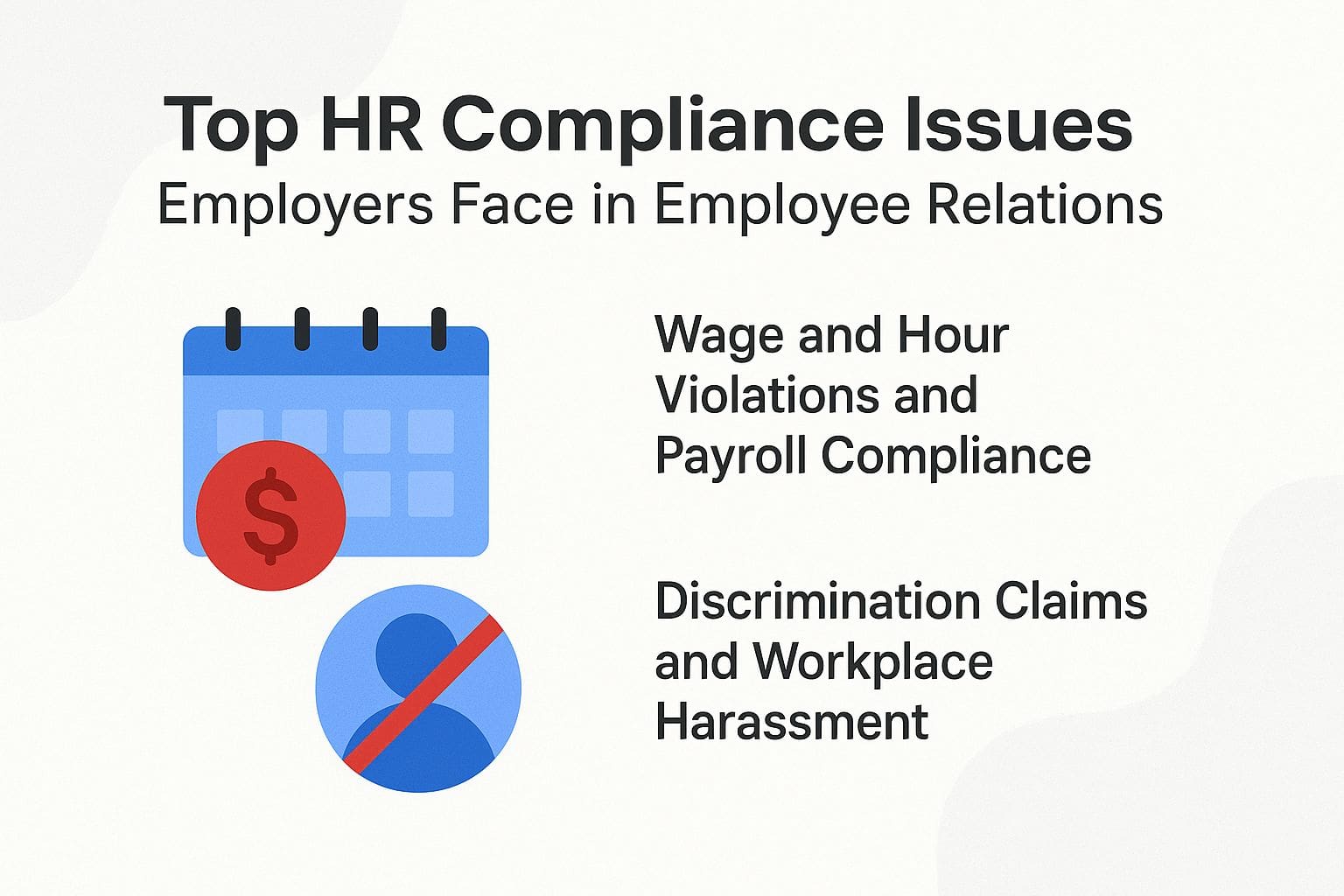
Top HR Compliance Issues Employers Face in Employee Relations
Employers often face various compliance challenges, including investigations and audits, that can lead to serious legal and financial consequences if not handled properly. To streamline these processes and mitigate risks, understanding the cost and capabilities of HR management systems can be invaluable. Learn more: HRMS Software Review & Cost Guide for insights on effective compliance management tools.
1. Wage and Hour Violations and Payroll Compliance
Employers need to know labor laws well because mistakes in wages and work hours can lead to back pay claims over $1 million, impacting employee classification and job descriptions.
Common pitfalls include misclassifying employees as exempt and failing to pay overtime, violating the Fair Labor Standards Act. For those new to business management or seeking additional guidance, it’s crucial to understand the nuances of remaining compliant. As highlighted in our article on how to stay compliant with labor laws as a new business owner, there are strategies that can aid in avoiding these common issues.
To solve this problem, use time tracking software like TSheets. The cost is about $15 per person each month and it helps keep accurate records.
It’s important to regularly review payroll procedures. Consider hiring a consultant to assess compliance annually as part of your compliance checks.
Create an open way for employees to report issues, encouraging honesty, whistleblower protections, and responsibility.
By taking these proactive steps, employers can lower risks and maintain fair labor practices, avoiding penalties and fines.
2. Discrimination Claims and Workplace Harassment
Discrimination claims can lead to hefty settlements, with the average payout reaching $500,000, underscoring the importance of a proactive approach to anti-discrimination laws and workplace diversity.
To reduce risks, organizations should set up thorough training programs on different types of discrimination, including age, gender, and race, aligned with Equal Employment Opportunity Commission guidelines.
Organize yearly training sessions with platforms such as Everfi, costing $3,000 each year, to educate employees on legal standards and company rules.
Consider soliciting anonymous feedback to assess the training’s effectiveness. Statistics show that organizations that provide harassment training see a 50% reduction in claims, emphasizing the need for ongoing education and awareness.
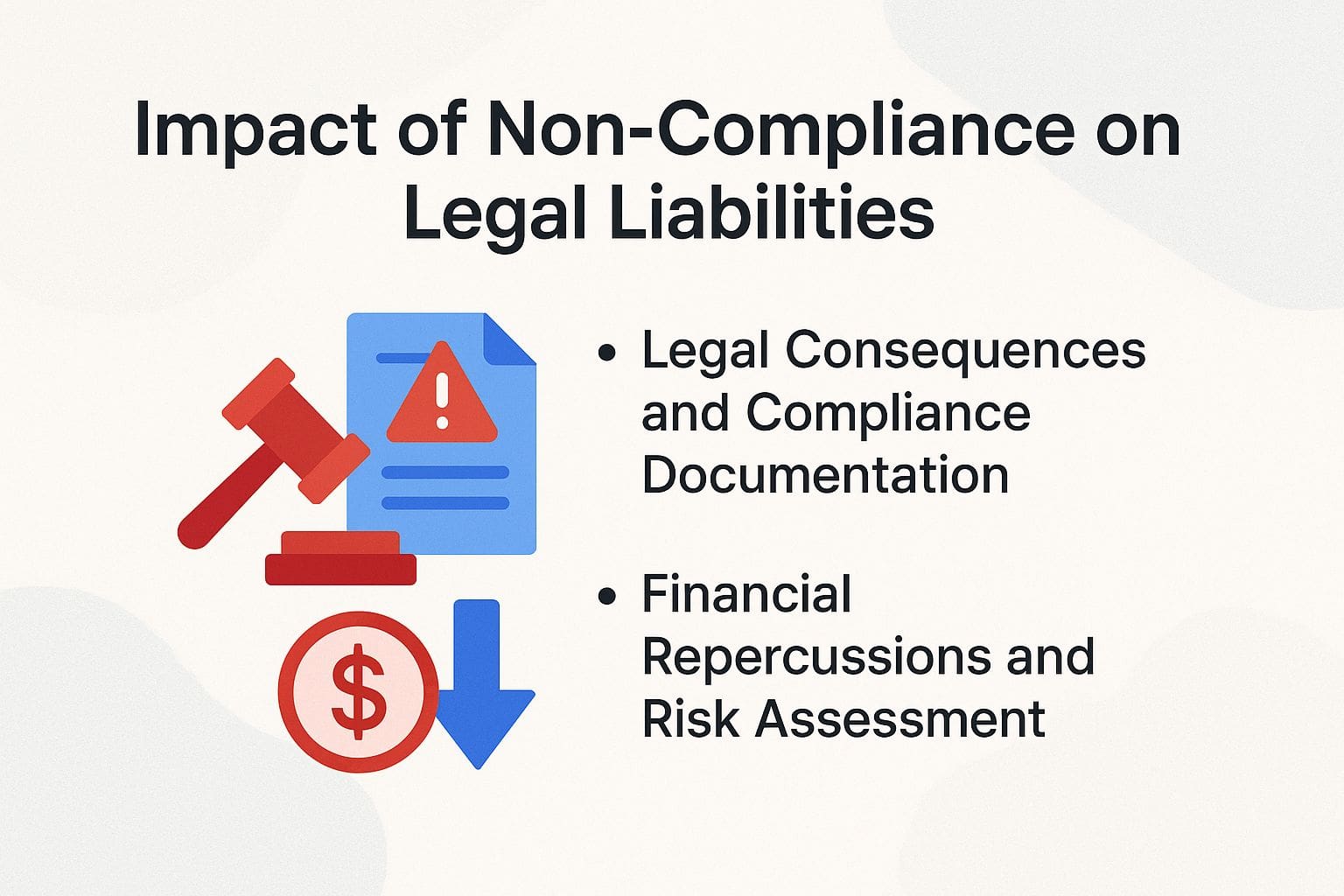
Impact of Non-Compliance on Legal Liabilities
Ignoring rules can lead to serious problems, often causing expensive lawsuits, detrimental HR metrics, and harm to a company’s image.
Legal Consequences and Compliance Documentation
Legal consequences of non-compliance can vary from fines in the thousands to criminal charges for serious infractions, affecting top executives and requiring compliance documentation.
For instance, the Wells Fargo fake accounts scandal resulted in the bank being fined $185 million for illegal account openings. Similarly, the Volkswagen emissions scandal brought fines exceeding $2.8 billion in the U.S. alone.
To avoid such repercussions, organizations must stay updated on regulations like the GDPR or Sarbanes-Oxley Act. Regular compliance audits, employee training programs, and using tools like ComplyAdvantage can help mitigate risks.
Regularly checking legal databases helps avoid compliance issues, safeguarding both the company and its leaders, and supporting best practices.
Financial Repercussions and Risk Assessment
If companies repeatedly break rules, they risk losing more than $1 million, emphasizing the need for risk assessment. It’s important to take action to avoid this.
Consider the case of British Airways, which faced a GBP183 million fine for a data breach due to non-compliance with GDPR regulations. Similarly, Marriott was fined $124 million after personal data of millions was compromised.
To reduce these risks, it’s important to invest in compliance training. Hold regular training sessions using tools like ComplianceWave or Acknowledgment.com. These tools help make sure employees know the important rules.
Conducting compliance checks every six months can help identify issues and prevent potential violations, saving companies from significant fines.
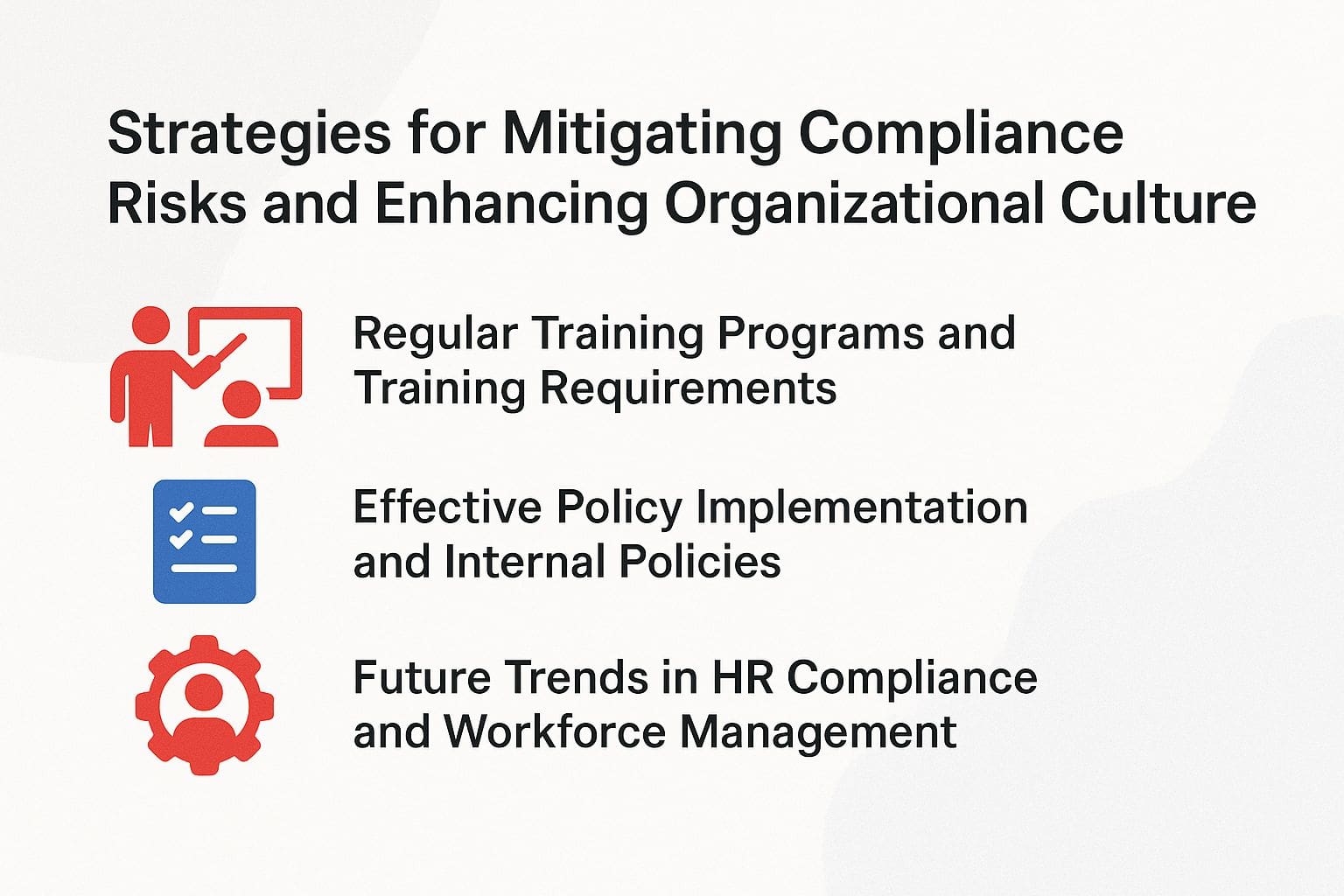
Strategies for Mitigating Compliance Risks and Enhancing Organizational Culture
Reducing compliance risks needs a broad strategy that includes frequent training and strong policy enforcement. If interested in understanding specific compliance concerns, explore our insights on how to stay compliant with labor laws as a new business owner.
Regular Training Programs and Training Requirements
Regular training programs can reduce compliance violations by up to 30%, ensuring employees are informed about policies, regulations, and compliance challenges.
To get the most out of your investment, think about using platforms like KnowBe4, which provides training modules starting at $1,000 annually.
Topics should include data privacy, workplace safety, and anti-corruption measures. Engaging content, such as interactive quizzes and scenario-based learning, keeps employees attentive.
Schedule quarterly refresher courses to reinforce knowledge and address updates in regulations. Using these strategies increases compliance and builds a sense of accountability in the organization.
Effective Policy Implementation and Internal Policies
Effective policy implementation is important; organizations that regularly review and update policies see a 25% decrease in compliance problems, benefiting from strategic HR.
To make your policy work better, start by writing clear documents that detail each step.
Try HR software like Gusto for easy policy management. It provides simple templates and a tidy platform for updates, starting at $39 a month.
Schedule quarterly reviews to evaluate policies against current laws and industry standards. Include important people in this process to get different viewpoints and keep policies up-to-date.
This active method helps reduce risks, supports organizational compliance, and encourages a culture of compliance across the organization.
Upcoming Directions in HR Compliance and Managing Employees
Upcoming developments suggest more HR technology will be used for checking compliance, emphasizing workplace investigations and teaching diversity.
Companies use tools like Zenefits and Gusto to simply handle compliance, ensuring they meet current rules and standards. Worth exploring: ADP vs Paychex vs Gusto: Payroll Company Comparison for insights on how these tools stack up against competitors.
These tools are essential for ongoing training on diversity and inclusion. For example, LinkedIn Learning provides specific courses that teach employees about hidden biases and being aware of different cultures.
This dual approach improves compliance and creates an inclusive workplace culture. It is essential for organizations to invest in both technology and training programs.