




Steel and Metal Garage Solutions: Which is Best For Me?
Looking for a garage that stands the test of time? Steel and metal garage solutions might be just what you need. With durability and versatility, they offer unmatched protection for your vehicles and tools. Learn about different garage options, things to think about when designing them, and why they are a good investment. Learn how these new solutions can improve your storage options!
Overview of Steel and Metal Garages
Steel and metal garages are pre-engineered structures, often available in kits, designed for quick assembly and durability.
These garage solutions can be easily changed to meet different needs, offering flexible storage options for various purposes.
Common uses include storage for vehicles, tools, and equipment, as well as serving as workshops or hobby spaces.
One major advantage is their weather resistance; many models can withstand heavy winds and snow, which is ideal for harsher climates.
Maintenance is minimal compared to traditional wood structures, as steel is resistant to rot and pests.
Brands like VersaTube and ShelterLogic offer popular options, each featuring different designs and sizes to fit your specific requirements.
Benefits of Choosing Steel and Metal
Choosing steel and metal garages offers many advantages, including energy-efficient designs and the use of durable materials, ensuring long-lasting performance.
Along with their resilience against rot and pests, steel garages offer impressive insulation properties, reducing heating and cooling costs by up to 25%. Many homeowners report decreased energy bills after installation.
Metal construction generally results in lower homeowner’s insurance premiums due to their fire-resistance capabilities. To maximize these benefits, consider investing in high-quality insulation, such as spray foam or reflective barriers, depending on your climate.
If you maintain a steel garage well, it can last over 50 years, making it a practical choice for long-term use.
Types of Steel and Metal Garages
Knowing the various steel and metal garages available helps you choose the right one for your needs. Considering the cost of these structures is also crucial. Explore our in-depth analysis on steel building costs to make an informed decision.
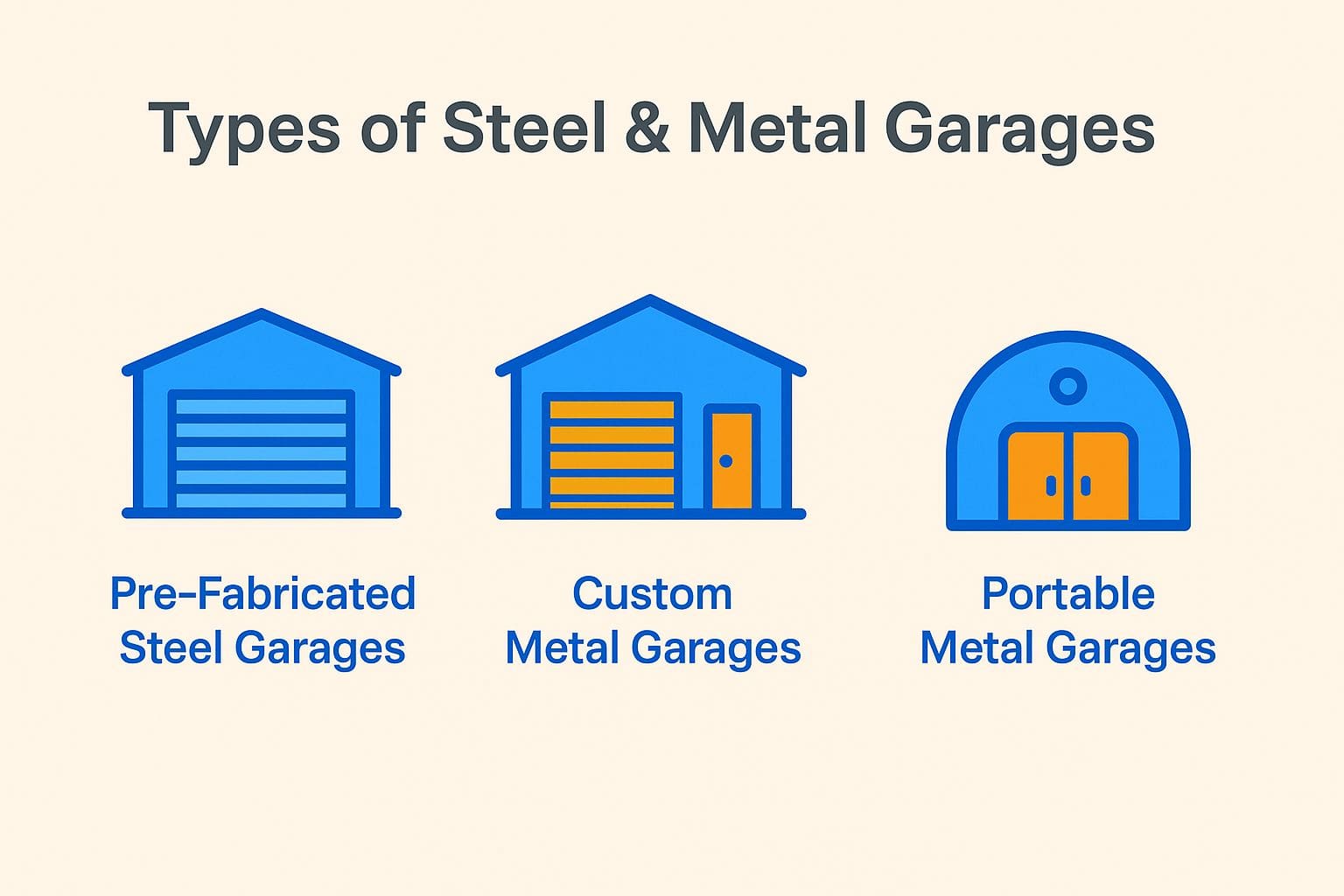
Pre-Fabricated Steel Garages
Pre-made steel garages are built in pieces, allowing for quick setup and easy changes.
These garages offer significant cost benefits, often requiring less labor and time for assembly compared to traditional structures.
Customization options range from size and color to additional features like windows and insulation, suiting various needs.
Well-known companies like VersaTube offer choices that can be customized to fit individual requirements, while SteelMaster is recognized for its durability and distinctive arched designs.
With prices averaging 15-30% lower than custom builds, pre-fabricated garages present a practical solution for homeowners and businesses alike.
Custom Metal Garages
Custom metal garages provide made-to-order options to match particular dimensions, designs, and uses for both homeowners and businesses.
- To build a metal garage that suits your needs, begin by selecting materials such as galvanized steel for durability and rust resistance.
- Next, consider layout options like single or double bays depending on your vehicle needs.
- Talk to local contractors who are familiar with building codes. They will make sure your garage meets rules about height, distance from property lines, and safety.
- A reliable contractor will help obtain the required permits, which can differ depending on the area.
- Working together during the planning stage can improve the use of space and make it more functional for what you need.
Portable Metal Garages
Portable metal garages offer flexible options for temporary or mobile uses, ideal for outdoor storage solutions and protecting vehicles.
One of the primary advantages is their easy relocation; most models can be disassembled and moved within a couple of hours. Installation options vary, with anchor kits ensuring stability in windy conditions.
For example, a 10×20 foot garage costs around $1,000, while a larger 12×24 foot model may range from $1,500 to $2,000.
When considering costs, factor in shipping and installation fees, which can add another $200 to $300, depending on your location and the selected features.
Design Considerations
Building your steel or metal garage needs careful thought about different elements to make it work well and look good. For an extensive analysis of this trend, our comprehensive study on how steel buildings champion eco-friendly construction explores sustainable design considerations crucial for your project.
Size and Space Requirements
Determining the size and space requirements for your garage is critical, impacting its usability and adherence to local zoning regulations.
Start by measuring your vehicle dimensions, including length, width, and height. A typical sedan is roughly 12 feet long and 9 feet wide, so make sure your garage is large enough to fit it easily.
Next, factor in additional storage needs for tools, bicycles, or seasonal items. Consider investing in shelving units or wall-mounted organizers to maximize vertical space. Make sure there’s enough room to open car doors and walk around in the garage.
Getting ready for upcoming needs, like setting up electric vehicle charging stations, can help you avoid wasting time and money later.
Roof Styles and Designs
Choosing the right roof style can significantly influence the aesthetic appeal and functionality of your garage.
Gable roofs are popular because they let water drain quickly and can hold up under heavy snow, which makes them a good choice for places with cold climates.
In contrast, flat roofs offer a modern look and maximize vertical space but may require additional drainage systems to prevent pooling water.
Barn-style roofs combine a unique visual appeal with structural advantages, promoting effective snow shedding.
Consider your local climate, budget, and aesthetic preferences when selecting a design, as each style has distinct maintenance needs, aesthetic appeal, and design implications.
Insulation Options
Good insulation in your steel garage can improve energy use and shield your vehicles and tools from very hot or cold conditions.
Among the best insulation materials for a steel garage are fiberglass batts, rigid foam boards, and spray foam, offering various garage insulation options to improve energy efficiency ratings.
Fiberglass batts are cost-effective, typically priced at $0.50-$1 per square foot, but require a vapor barrier for moisture control.
Rigid foam boards, at $1.50-$3 per square foot, provide higher R-value and are easier to install on walls.
Spray foam offers superior air sealing and insulation at $1.00-$3.00 per square foot but can be more labor-intensive.
Each option has its benefits, so consider budget, climate, and installation preferences to make an informed choice.
Construction Process and Installation Services
Constructing steel and metal garages includes several key steps, starting with preparing the site and ending with assembling all parts. Understanding the financial aspects is also crucial, as costs can vary significantly; see also our detailed guide on how much steel buildings might cost in 2025 for more insights.
Site Preparation and Land Use Planning
Proper site preparation is essential for ensuring the stability and longevity of your metal garage structure, aligning with local regulations and land use planning.
- Begin by clearing the site of any debris, vegetation, or large rocks to create a clean working area.
- Next, assess your soil conditions; sandy soils provide good drainage while clay can retain water, potentially affecting your garage’s foundation.
- Use proper drainage methods, like French drains or a gentle slope away from the building.
- Look at local zoning rules to make sure you follow them, since some places might limit the size or location of a garage.
By investing time in this preparation, you’ll create a strong, long-lasting foundation for your metal garage.
Foundation Types
Selecting the right foundation type is critical for the structural integrity and durability of your steel garage.
Consider three primary foundation options: a concrete slab, pier and beam, or a full basement.
- A concrete slab is cost-effective (around $4-$7 per square foot) and ideal for stable soil.
- Pier and beam foundations provide improved airflow and moisture management, which makes them good for damp areas, though they cost more ($6-$10 per square foot).
- Full basements, though costing between $12 and $20 per square foot, offer additional storage space and protection during harsh weather.
Assess your garage size, local climate, and soil type to determine the best fit for your needs.
Assembly Techniques
Knowing assembly methods can make building your metal garage smoother, whether you decide to do it yourself or hire a professional.
Start by gathering essential tools such as a power drill, level, and wrench set. These will make sure everything is put together and placed correctly.
Plan your assembly phases: begin with constructing the base, followed by the walls, and finally, the roof.
If you choose to hire experts, plan with them and give a clear schedule. Typically, a simple metal garage can be built in 1-2 days. Communicate any specific design features you want to avoid delays.
Following these steps will make construction simpler and create a reliable structure.
Cost Factors
Knowing the cost factors of building a metal garage, including material costs and potential financing options, can help you plan your budget well. For a deeper understanding, you might consider this analysis on the pricing and maintenance of steel buildings, which provides valuable insights into these cost considerations.

Material Costs
Material costs can vary significantly based on the type of metal and additional features included in your garage structure.
For instance, the price of galvanized steel panels ranges from $2 to $4 per square foot depending on their thickness and finish.
Insulation materials such as rigid foam range in price from $0.50 to $1.50 per square foot and are important for saving energy.
As for roofing options and siding choices, a metal roof typically ranges from $300 to $600 per square, while asphalt shingles might run $100 to $150 per square. Consider exploring different garage types and building permits requirements when planning your project.
By choosing eco-friendly materials that fit your budget and work well in your climate, you can improve your garage’s strength and use, thus enhancing workspace efficiency and overall vehicle storage capabilities.
Labor Expenses and Construction Timeline
Labor expenses can account for a substantial portion of your total garage construction budget, particularly for custom garage or complex builds involving metal building systems and steel framing.
Typically, hiring contractors can cost between $50 to $150 per hour, influenced by experience and local market rates.
For instance, framing may average around $75/hour, whereas plumbing could rise to $100/hour due to its specialized nature.
Evaluating whether to hire professionals or undertake DIY tasks depends on your skillset and the project’s complexity. Basic tasks such as painting or installing flooring can be done on your own to cut expenses. Plumbing and electrical tasks often need licensed experts to make sure everything is safe and follows regulations.
Additional Features and Upgrades
Adding more features and improvements can make your insulated garage work better and be more useful, incorporating design flexibility and improving all-weather performance.
Consider these popular upgrades:
- Insulated overhead doors, usually around $1,000, help control temperature and reduce energy bills. Homeowners notice lower heating expenses and better safety features in their garages.
- Lighting systems with motion sensors and remote control features, costing about $200, improve security.
- Upgrading electrical wiring (typically $1,500-$3,000) allows for heavy-duty tools and additional outlets, streamlining work processes.
Homeowners often say that these improvements make their garages more practical and can increase the resale value of their homes, making them good investments.
Maintenance and Longevity
Maintaining your steel garage is important for ensuring it remains durable, attractive, and functional. To understand the costs involved in maintaining and upgrading steel buildings, see this detailed analysis ( How Much Do Steel Buildings Cost in 2025?).

Rust Prevention Techniques
Implementing rust prevention techniques can significantly extend the life of your steel garage, avoiding costly repairs.
Among the most effective methods are galvanization, which involves coating steel in zinc for around $0.50 per square foot, and applying high-quality paint coatings, costing approximately $1.00-$2.00 per square foot.
Regular cleaning, using a saline solution or mild detergent, should be scheduled at least quarterly. This simple maintenance can prevent corrosion and only requires a few hours of labor.
By using these methods, you increase the building’s durability and make it look better, which helps you avoid costly repairs.
Regular Maintenance Practices
Performing regular maintenance practices can help keep your metal garage organized and functional over the years.
- Check the doors for rust or damage at least twice a year; oil the hinges so they work smoothly.
- Clean gutters seasonally to prevent water buildup, and check seals around windows and doors for signs of wear.
- For a DIY touch, use a pressure washer to remove debris and maintain cleanliness.
- Think about tidying up your tools with pegboards or shelves every few months to make better use of space.
- Doing these maintenance jobs will help your garage last longer and make it more useful.
Final Thoughts on Steel and Metal Garages
Choosing a steel or metal garage is a lasting decision that can increase your property’s worth and usefulness.
To choose the right garage, assess your specific needs first. Consider factors like size, intended use, and location restrictions.
For instance, if you’re planning to store vehicles, a wider garage with ample height is ideal. Use the Garage Planning Guide to get accurate measurements and arrange your space well. Look up local zoning rules to follow them correctly.
Comparing manufacturers can also help; for example, look into:
- X-Garage for customizable designs
- SteelMaster for pre-engineered options
A well-thought-out decision will meet your current needs and improve your property’s attractiveness.
Future Trends in Garage Solutions
Upcoming trends show a move towards using energy-saving and eco-friendly materials in building garages, including sustainable steel siding and green building practices.
This shift is exemplified by the increasing adoption of solar panel integrations, which can reduce energy costs by up to 40%. Many builders are now using sustainable materials such as recycled steel and bamboo, promoting lower carbon footprints.
Modern garage technology, such as energy-saving lighting and automatic climate controls, is becoming standard, improving both ease of use and energy use.
By prioritizing these advancements, homeowners can enjoy long-term savings while contributing to environmental sustainability, reflecting a growing consumer preference for green construction practices.
 About The Author
Jordan Blake is a B2B strategist and contributor at Price It Here, where she shares expert advice on buying decisions and business growth. She holds a Bachelor’s in Business Administration from the University of Michigan and an MBA from Northwestern’s Kellogg School of Management.
With over a decade of experience in procurement and vendor strategy, Jordan helps businesses save money and scale smarter. Her practical insights make her a trusted voice for entrepreneurs seeking cost-effective, results-driven solutions.