



The Most Costly Payroll Errors and How to Avoid Them
Payroll errors can drain your finances and damage employee trust-can you afford that? Managing payroll correctly is essential for your business, yet errors often happen. From misclassifying employees to failing to update information, these costly blunders can lead to serious repercussions. Find out the most common payroll mistakes and learn practical ways to protect your business from them. Let’s make sure your payroll process runs smoothly.
The Most Costly Payroll Errors
Handling payroll can be tricky, and payroll processing mistakes can cost businesses thousands of dollars each year. Understanding the costs associated with payroll services is crucial to avoid these costly errors. For more detailed information, have a look at our analysis on Payroll Service Cost in 2025.
The Importance of Accurate Payroll Management
Getting payroll right is important for businesses. It ensures workers get the correct pay on time and avoids legal issues. Managing payroll well can increase employee happiness and safeguard the company’s good name. Frequent checks and updates to payroll systems are necessary to keep things running smoothly.
Proper handling of payroll guarantees employees are paid on time and that labor laws are followed, preventing expensive penalties or legal issues, such as payroll tax penalties.
Make sure to keep accurate payroll records and file payroll documents correctly. For instance, the IRS imposes penalties for incorrect tax filings, which can range up to 25% of the underpaid tax.
To stay compliant, try payroll software like Gusto or QuickBooks, which calculates tax withholdings and creates needed forms automatically, ensuring payroll compliance.
Checking payroll records every three months can find mistakes and make sure the payroll is correct. Educating your HR team about payroll rules can decrease errors and help produce accurate financial reports.
Common Payroll Errors
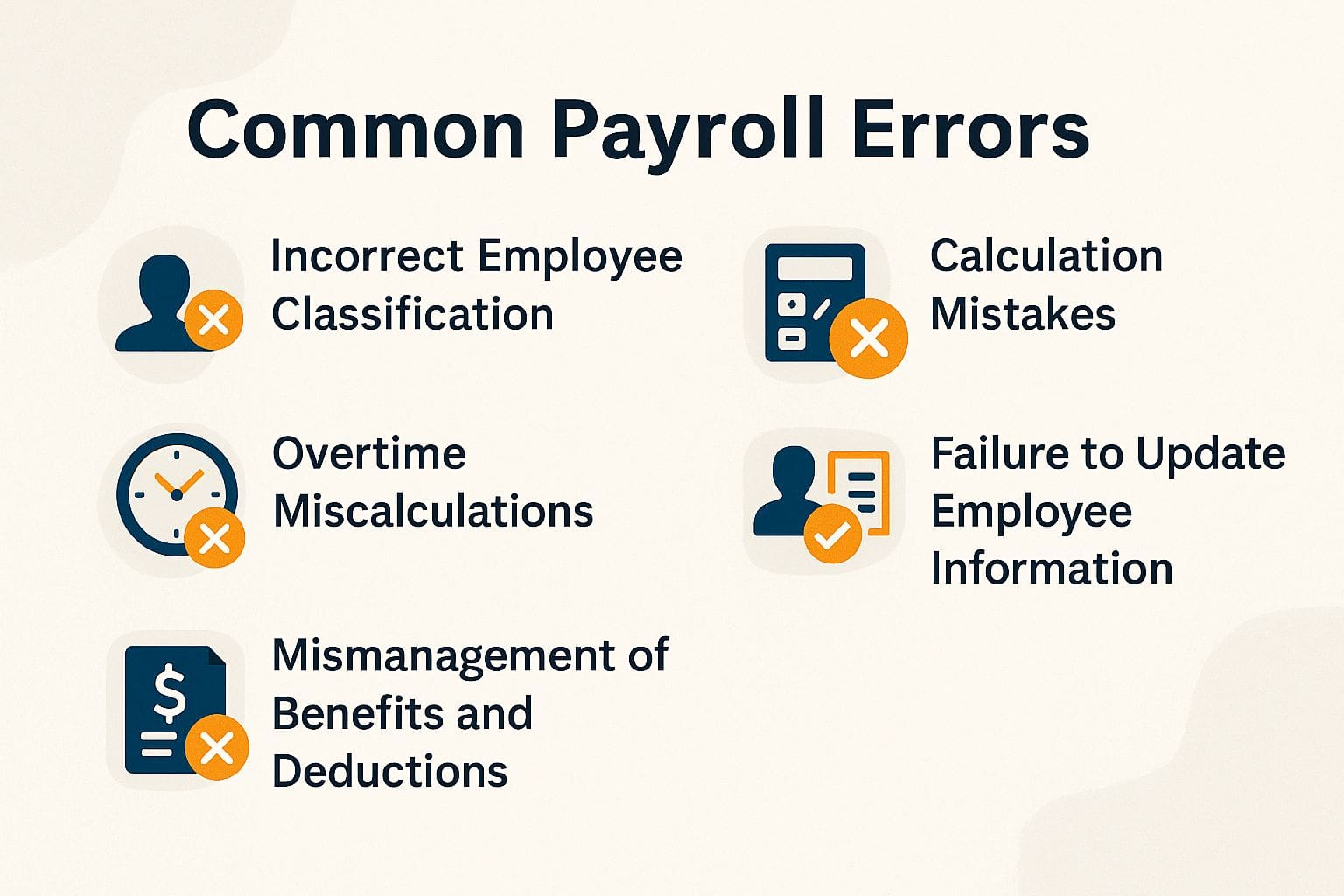
Spotting regular payroll mistakes can help prevent big financial losses and fines that may result from incorrect payroll management.
Incorrect Employee Classification
Misclassifying employees as independent contractors can lead to miscalculations of payroll taxes and benefits, endangering compliance with labor laws.
Mistakenly categorizing workers can lead to huge fines for businesses. For example, FedEx had to deal with lawsuits amounting to over $500 million because of wrongly classifying drivers.
To prevent these issues, businesses should regularly check how employees are classified by examining their job responsibilities and pay systems. Utilizing tools like TurboTax’s business helpers or IRS guidelines can aid in compliance. For a more comprehensive understanding, learn more about staying compliant with labor laws as a business owner.
Implementing clear payroll policies and training for HR personnel on proper classification also mitigates risks, ensuring that employees receive appropriate benefits while protecting the organization from legal repercussions.
Calculation Mistakes
Calculation mistakes, such as incorrect tax withholdings, can result in significant financial discrepancies and employee dissatisfaction.
For instance, a well-known retailer faced an IRS audit and IRS regulations scrutiny due to miscalculating overtime pay. They had incorrectly classified employees, leading to under-withholding of taxes and resulting in a substantial penalty.
To prevent problems, companies should routinely check payroll procedures, use reliable payroll software like Gusto or ADP, and carry out regular audits.
Maintaining open communication with employees regarding pay structures can build trust and help identify potential salary discrepancies early on.
Using double-check systems and payroll reconciliation practices helps maintain accuracy and compliance, which lowers the chance of financial problems.
Overtime Miscalculations
Mistakes in calculating overtime can result in large fines and demands for back pay, highlighting the importance of correctly recording hours worked.
A tech company was fined $500,000 because it miscalculated overtime and missed counting the hours worked by some employees, showcasing potential wage theft issues. To prevent such issues, companies can use tools like TSheets or Harvest for real-time tracking.
Establish clear policies regarding overtime calculations, ensuring managers are trained on legal requirements. Regularly reviewing payroll records can help find mistakes before they become bigger issues.
By using these methods, businesses can avoid expensive penalties and follow labor laws.
Failure to Update Employee Information
Neglecting to update employee information-such as address changes or marital status-can lead to incorrect tax withholdings and compliance issues.
To maintain accurate employee records, consider using tools like Gusto and ADP. Gusto makes it easy to manage payroll and benefits, letting you make changes instantly. It notifies you of required changes, ensuring compliance with tax regulations.
ADP, in contrast, offers reliable reporting tools, making it easy to monitor updates and generate required documents.
Regularly scheduled audits of employee records, ideally quarterly, can also help identify discrepancies before they become issues, keeping your payroll process smooth and compliant, and aiding payroll error prevention.
Mismanagement of Benefits and Deductions
Improper management of employee benefits and deductions can result in significant payroll errors and employee dissatisfaction.
To avoid these problems, make sure to record benefits correctly and manage benefits administration effectively. Use payroll software like Gusto or ADP that allows for easy integration of employee benefits.
These tools let you automatically deduct amounts and create reports to find mistakes. Regularly review these reports, ideally monthly, to catch any anomalies.
Offer training to HR staff on typical mistakes, like incorrect input of employee details or updates in benefit choices, so they can handle the system well.
Financial Implications of Payroll Errors
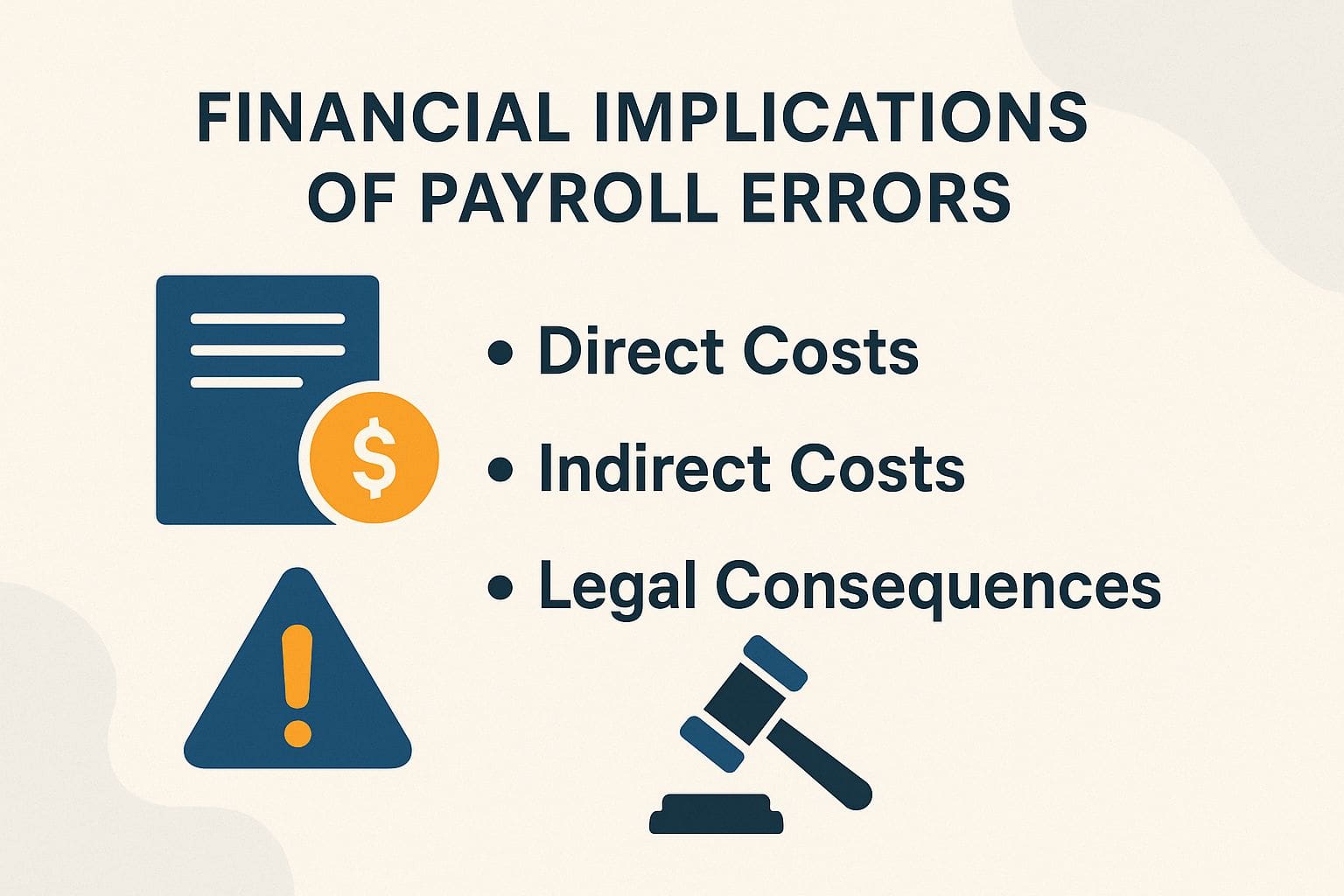
Mistakes in payroll can result in costs that last a long time and affect businesses in various ways, including increased staffing costs. For those navigating these challenges, these essential payroll hacks provide strategies to manage and mitigate potential errors.
Direct Costs
Direct costs from payroll errors can include tax penalties, overtime back pay, and administrative fees, which can quickly add up.
For example, a company might incur a $10,000 penalty due to late tax filings and an additional $5,000 in overtime pay for staff covering error corrections. To quantify these costs, track each error’s date and financial impact, including lost productivity.
Using payroll software like Gusto or ADP helps avoid mistakes by automatically calculating taxes and submitting them on time. You should carry out audits routinely, preferably every three months, to identify and correct any discrepancies before they develop into larger problems.
Indirect Costs
Indirect costs from payroll errors can affect employee morale, productivity, and retention, leading to higher turnover rates.
Research indicates that a 30% increase in turnover can occur when payroll inconsistencies arise, as employees feel undervalued and mistrustful. To lessen these risks, companies should carry out regular checks and use payroll management software like Gusto or QuickBooks, which handle calculations and cut down on mistakes.
Explaining how pay is determined can build trust. Conducting employee feedback surveys every three months helps identify payroll issues early before they become major problems.
Legal Consequences
Legal consequences stemming from payroll errors can result in lawsuits, fines, and costly settlements that can jeopardize a business’s financial health.
For example, a company that misclassifies employees might face audits and penalties exceeding $50,000 under the Fair Labor Standards Act.
Tools like payroll software (e.g., Gusto or ADP) can help make sure you follow the rules by doing calculations and classifications automatically. Regularly consulting with payroll experts or accountants can also mitigate risks, allowing businesses to correct errors before they escalate.
Instituting a double-check system within your payroll process can catch mistakes early, preserving both financial integrity and trust with your employees.
Strategies to Avoid Payroll Errors
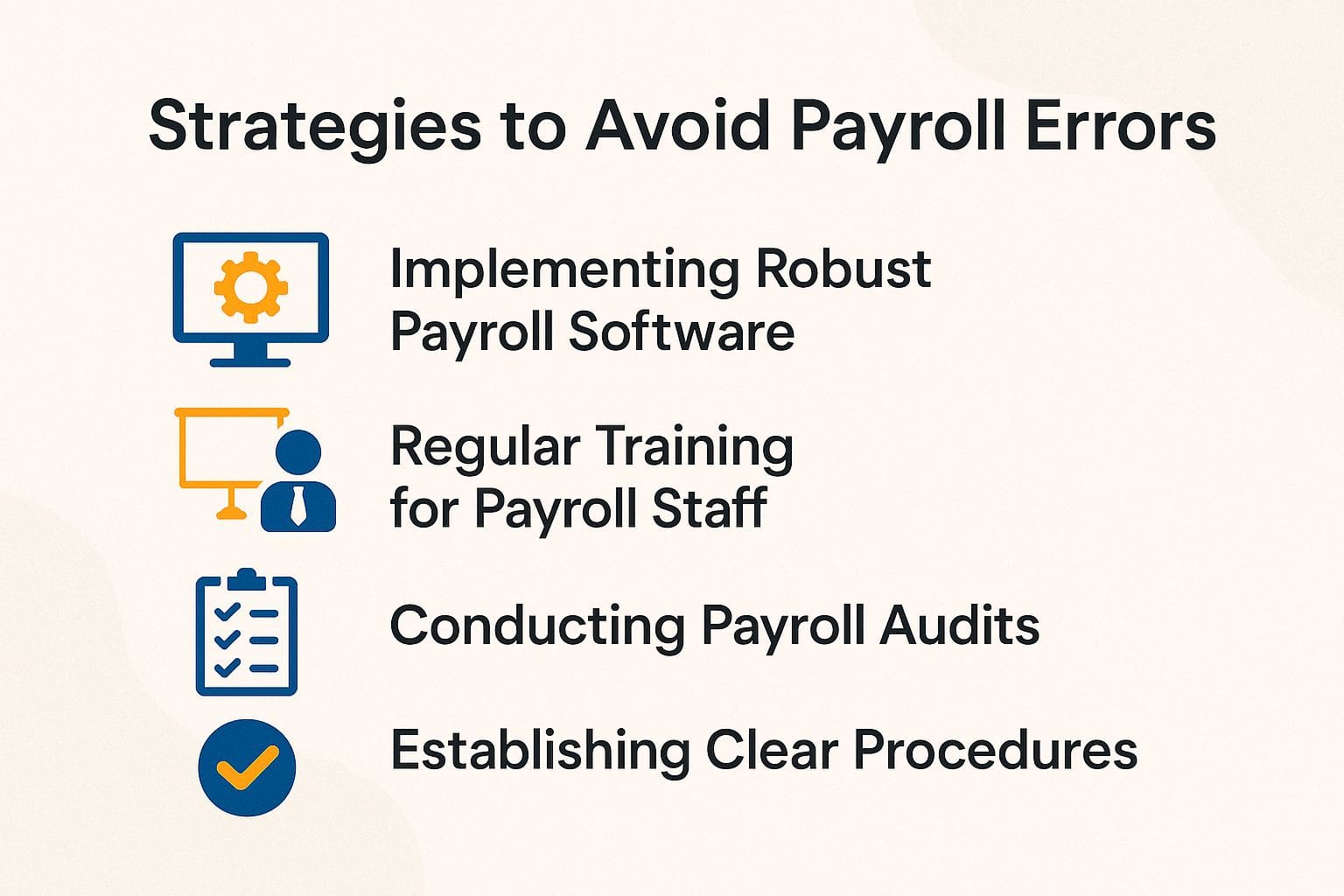
Using good methods to prevent mistakes in payroll can help companies avoid losing money and facing legal problems.
Implementing Robust Payroll Software
Using reliable payroll software like QuickBooks Payroll or Paychex can simplify payroll tasks and greatly reduce mistakes.
These platforms automatically perform important calculations, guaranteeing correct employee payments and tax deductions.
For instance, QuickBooks Payroll starts at $45/month and provides direct deposit features, while Paychex offers customizable payroll solutions for businesses of all sizes.
Both systems include compliance checks that help you stay up-to-date with tax laws, significantly reducing the risk of penalties.
By integrating such software, businesses save time and resources, allowing you to focus more on strategic functions rather than administrative hassles.
Regular Training for Payroll Staff
Regular training for payroll staff can improve their skills and decrease the chance of mistakes during payroll processing.
This training can be achieved through various methods, including attending workshops offered by the American Payroll Association or enrolling in online courses like those from Udemy, which typically range from $20 to $200.
Regular webinars on regulatory updates keep staff informed of the latest compliance requirements pertinent to payroll management.
Encourage team members to participate in peer reviews, where they can learn from one another’s experiences and solve real-world payroll issues together.
Implementing these strategies can significantly improve accuracy and efficiency in payroll operations.
Conducting Payroll Audits
Regular payroll audits help identify discrepancies and areas for improvement, ensuring compliance and accuracy in payroll processes, such as payroll error resolution.
To perform a thorough payroll check, begin by collecting the necessary papers, such as employee files, payroll statements, and tax documents.
Try using ADP’s audit services, which offers a detailed review and points out possible compliance problems.
Schedule these audits quarterly to maintain consistency and address any problems promptly.
Get feedback from human resources, finance, and compliance to fully understand your payroll practices and address payroll errors causes. Working together helps find and fix any problems quickly.
Establishing Clear Procedures
Having clear steps for payroll processing helps prevent errors, increases payroll clarity, and makes processes more efficient, leading to fewer mistakes.
To create effective payroll procedures, start by developing a detailed documentation template that outlines each step of the process, including the collection of employee data, timekeeping methods, and payment calculations.
Use a payroll checklist that covers essential tasks such as:
- Reviewing work hours and ensuring correct time records
- Figuring out deductions and paycheck deductions
- Ensuring tax laws are obeyed and align with IRS rules
Tools like QuickBooks and Gusto can handle much of this work automatically, integrating with accounting for payroll consistency, while a weekly meeting can help find problems early. This ensures everyone understands and keeps payroll correct.
Best Practices for Payroll Management
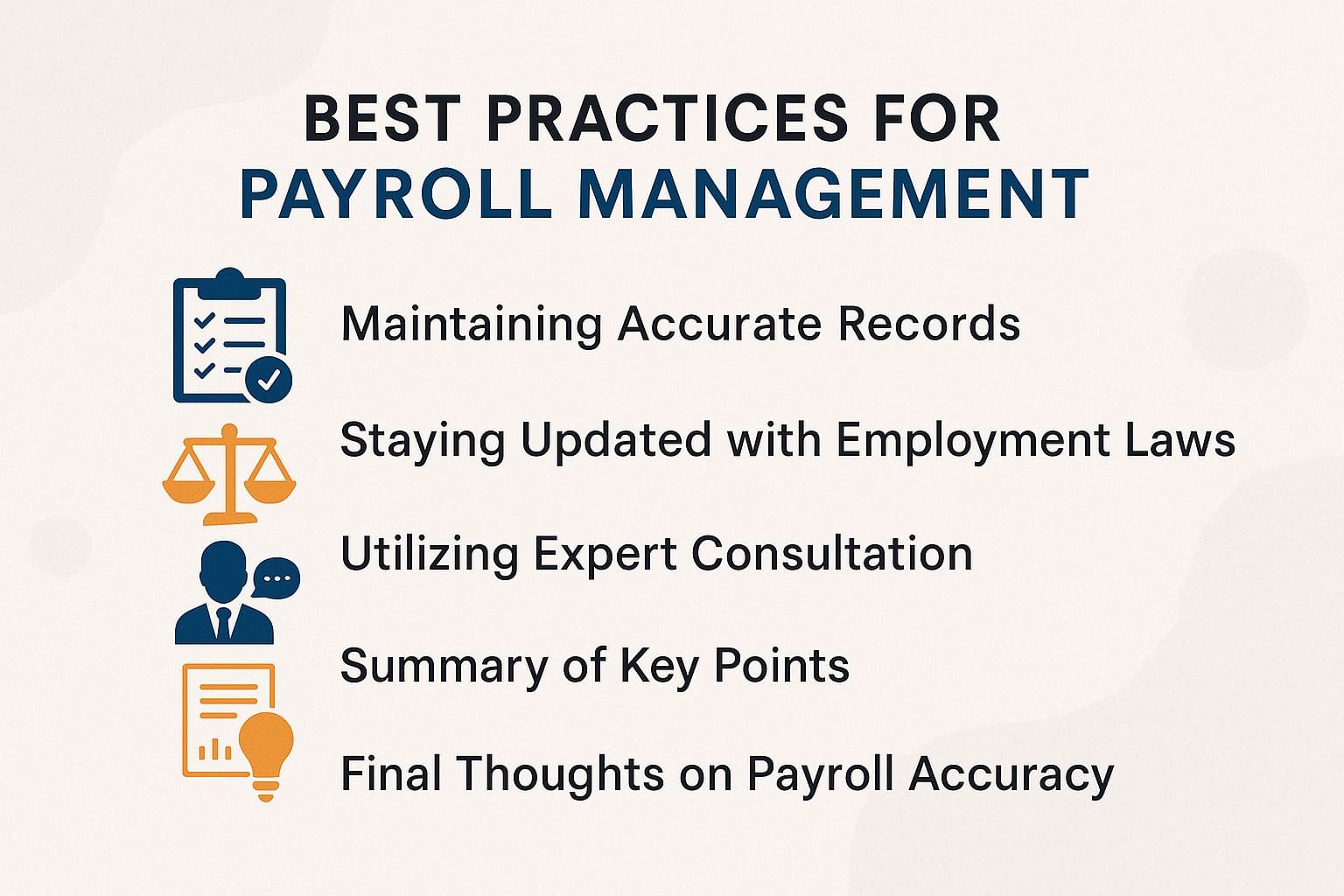
Using effective strategies for payroll management can improve accuracy, federal compliance, and efficiency in payroll tasks, thereby reducing costly payroll mistakes. For those exploring the best tools to enhance these strategies, our guide on the Top 10 Payroll Services of 2023 serves as a hidden gem providing detailed comparisons to help make informed decisions.
Maintaining Accurate Records
Correct employee records are essential for tax deductions, payroll data security, and following labor laws.
To make this process easier, think about using HR systems like BambooHR or Zenefits, ensuring effective payroll systems.
BambooHR helps you securely keep employee details, create audit trails, and monitor changes over time, which makes compliance checks easier.
Zenefits, on the other hand, integrates benefits administration with employee records, ensuring benefits compliance and that you stay compliant with healthcare laws.
Set a regular schedule for auditing records-quarterly reviews help catch discrepancies early.
Following these steps makes it easier to meet compliance rules and improves how employee data is handled.
Staying Updated with Employment Laws
Regularly updating knowledge of employment laws is critical to maintain compliance and avoid payroll errors and penalties, addressing employee misclassification.
To stay informed, subscribe to reputable newsletters such as the Society for Human Resource Management (SHRM) or the National Association of Professional Employer Organizations (NAPEO). These resources provide timely updates and analyses.
Consider attending webinars offered by organizations like the HR Certification Institute, which often cover the latest legislative changes. Make sure to review your compliance processes every three months to confirm they align with current legal rules.
This proactive approach can save your organization from costly penalties.
Utilizing Expert Consultation
Talking with payroll professionals can offer useful information to improve payroll tasks and follow rules, enhancing payroll consultation practices.
The cost to hire a payroll consultant is usually between $100 and $300 per hour. The rate depends on their experience and how complicated your requirements are.
For example, a medium-sized tech company might pay about $2,000 for a consultant to improve their payroll system so it follows state regulations, which decreases mistakes and saves time.
One notable case is a retail business that, after working with a payroll expert, saw a 30% decrease in monthly payroll processing time and significantly improved tax compliance, demonstrating the ROI of such services.
Summary of Key Points
Key points from this discussion include the identification of common payroll errors causes and the financial implications of such mistakes.
To effectively manage payroll and minimize errors, implement key payroll best practices such as regular audits and employee training.
Start with monthly payroll audits to identify discrepancies early, ensuring financial accuracy. Use reliable payroll software such as ADP or Paychex to handle calculations, payroll error tracking, and minimize mistakes made by people.
Offer payroll training sessions for your HR staff on compliance and software use. By encouraging awareness, you can greatly decrease expensive errors, leading to a more efficient payroll process that positively affects your profits and employee satisfaction.
Final Thoughts on Payroll Accuracy
Ensuring payroll accuracy is not just a compliance issue; it involves payroll transparency and is a cornerstone of employee trust and organizational success.
To make sure payroll is correct, start by using reliable payroll technology such as Gusto or ADP that takes care of calculations on its own.
Regularly review payroll data, looking for issues like wrong overtime calculations, incorrect payroll records, or hours that do not match.
Training payroll staff on tax laws and rules is important; use resources like the IRS’s website for the latest information, ensuring payroll industry standards.
Encourage employee self-service review of their payslips to catch any errors early.
Doing these activities helps build trust, keeps employees from leaving, and results in long-term business success and satisfied employees.
About The Author
Jordan Blake is a B2B strategist and contributor at Price It Here, where she shares expert advice on buying decisions and business growth. She holds a Bachelor’s in Business Administration from the University of Michigan and an MBA from Northwestern’s Kellogg School of Management.
With over a decade of experience in procurement and vendor strategy, Jordan helps businesses save money and scale smarter. Her practical insights make her a trusted voice for entrepreneurs seeking cost-effective, results-driven solutions.
