



How Much Do Interactive Kiosks Cost in 2025?
In a busy airport, a smooth kiosk gets you checked in quicker than waiting in line. Interactive kiosks promise that efficiency, but their kiosk cost and price of kiosks? It swings from pocket change to six figures for affordable kiosks to high-end kiosks. Businesses checking return on investment for kiosks need to know the costs of interactive kiosks. This counts in the kiosk business. This guide unpacks types like self-service and retail setups, factors from touchscreen tech to custom software, plus cost breakdown and average kiosk price ranges-entry-level at $2,000, up to $50,000 for premium models, with market trends showing increasing adoption.
What Are Interactive Kiosks?
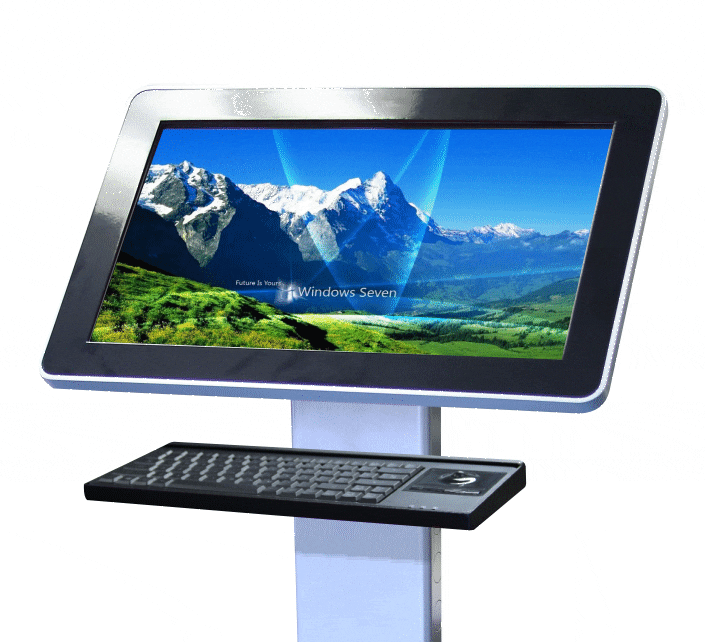
Interactive kiosks are self-contained devices with touch screens and kiosk features. They let users get information, finish transactions, or use services on their own, enhancing user experience.
For example, Walmart uses 55-inch LG touch screen kiosks to look up products.
These kiosks include these main parts:
- kiosk hardware cost for hardware such as strong cases and clear high-definition touchscreen displays (for example, 4K touchscreens from Elo Touch);
- kiosk software cost for software that has user-friendly interfaces based on Android or Windows with analytics, data collection, and AI-powered kiosks features for simple operation;
- connectivity options like NFC for tap-to-pay, IoT integration, or API links to back-end systems for remote management and updates.
Kiosk design adheres to ISO 9241-210 standards for ergonomic, user-centered interfaces, ensuring accessibility and compliance.
Real-world examples include:
- McDonald’s self-service ordering kiosks, cutting wait times by 30% per a 2022 Nielsen study;
- Smithsonian Museum’s information kiosks with interactive exhibits on history and artifacts;
- Mall payment kiosks handling 500+ daily transactions via card or mobile;
- Airport check-in kiosks like Delta’s, streamlining boarding with QR code scans.
Why Understand Their Costs?
Interactive kiosks cost from $2,000 for basic models to more than $20,000 for custom kiosk pricing. These costs affect return on investment. For example, a retail kiosk can increase sales by 20%, according to Forrester Research in 2021, with case studies showing similar outcomes.
To improve investments, look at these four main reasons along with the supporting numbers:
- Budget for kiosks planning, where total cost of ownership (TCO) averages $5,000-$15,000/year per Gartner (2023), covering hardware, software, maintenance fees, upgrade costs, and lifecycle costs.
- ROI for kiosks evaluation, expecting payback in 6-12 months through labor savings of $50,000 annually by automating customer interactions.
- Scalability decisions, leveraging bulk discounts up to 25% from kiosk suppliers like Elo Touch for multi-site kiosk deployment.
- Risk avoidance, accounting for hidden fees such as $500 installation cost, integration costs, and training costs.
A hotel chain saved 15% on kiosk deployment by upfront cost analysis, including financing options, kiosk rental cost for leasing kiosks, and buy vs rent kiosks decisions, per Hospitality Net report with testimonials, ensuring smoother rollout and competitive pricing.
Types of Interactive Kiosks
Interactive kiosks differ by purpose and kiosk features. At Starbucks, they handle self-service ordering.
At United Airlines airports, they serve as ticketing kiosks and check-in stations. Each one suits the demands of its industry, with prices ranging from $3,000 to $15,000.
Self-Service Kiosks
Self-service kiosks let customers complete orders on their own. For example, Panera Bread’s kiosks process 60% of orders and reduce labor costs by 25%, according to QSR Magazine in 2022.
These kiosks usually have 10-32 inch touchscreens for easy use, built-in printers to print receipts, barcode scanners, speakers, and a safe operating system like Windows IoT to work well. For implementation, consider these examples:
- Restaurants like McDonald’s use models costing $4,000-$8,000 to speed up ordering;
- Airport ticketing kiosks, as with Delta’s $5,000-$12,000 scanners, streamlines check-ins;
- Hotel check-ins at Marriott run $3,500-$7,000, enabling keyless entry.
Set up payment integration through Square (2.6% fee) and comply with ADA for ADA compliant kiosks by adding voice recognition guidance and adjustable heights to match accessibility standards (ADA.gov).
Information and Directory Kiosks
 Information kiosks deliver wayfinding and content, such as the 24/7 directory units in Singapore’s Changi Airport guiding 50 million passengers yearly with 99% uptime.
To implement effective kiosks, focus on durability of components like 15-42 inch touchscreens and basic processors such as Intel Celeron for reliable performance in high-traffic areas. Start by assessing user needs-e.g., multilingual support for diverse audiences-then select kiosk suppliers offering customization options for customizable software for easy content updates via cloud-based kiosks dashboards.
- Digital signage kiosks for mall directories at Simon Properties ($2,500-$6,000), providing store maps and promotions.
- Hospital information systems such as Mayo Clinic’s cost $3,000 to $5,500 and feature a user interface in multiple languages to help patients find their way.
- Museum exhibits, such as the Louvre’s ($4,000-$9,000), featuring interactive artifact guides.
A 2021 Nielsen Norman Group study shows that clear menus in these systems cut user irritation by 40% and raise user activity.
Retail and Payment Kiosks
Retail kiosks make shopping easier, like Best Buy’s interactive displays that increase upsell by 15% using built-in payment integration from companies like Verifone.
These systems often feature EMV-compliant card readers for secure chip-and-PIN transactions with security features and 21-inch HD touchscreen displays for intuitive interfaces. Kiosks must follow PCI DSS standards and compliance to keep cardholder data safe from breaches.
A 2023 Deloitte report highlights a 25% sales lift from NFC integration, enabling contactless payments like Apple Pay.
Key implementations include:
- Point of sale kiosks for store checkouts (e.g., Target): $5,000-$10,000, with self-scan and payment modules.
- Vending kiosks (e.g., Coca-Cola machines): $3,000-$7,000, equipped with inventory sensors for auto-restock alerts.
- Photo kiosks (e.g., photo booths at CVS): $4,500-$8,500, including high-res cameras and instant print options.
Setup involves installing Verifone VX 520 readers and calibrating screens for 1080p resolution, typically completed in 4-6 hours.
Healthcare and Check-In Kiosks
Healthcare kiosks facilitate secure patient intake with security features, such as Cleveland Clinic’s units reducing check-in time from 10 to 2 minutes, per HIMSS 2022 survey.
To maximize efficiency, integrate HIPAA-compliant features like biometric scanners including facial recognition for identity verification and 19-inch rugged screens for reliable touch interaction in high-traffic environments.
FDA rules for integrating medical devices (21 CFR Part 11) protect data security during patient interactions.
A McKinsey study (2023) reports 30% efficiency gains in healthcare operations via such tech.
Actionable examples include:
- Clinic registration kiosks, as used by Kaiser Permanente ($6,000-$12,000), streamlining insurance verification;
- Pharmacy dispensing units at CVS Health ($5,500-$11,000 with RFID integration for inventory tracking);
- Telehealth stations ($7,000-$15,000) for remote vitals monitoring, reducing wait times by capturing blood pressure and temperature data onsite.
Key Factors Influencing Costs
Kiosk costs hinge on hardware choices like 32-inch displays adding $1,500 or custom kiosk enclosures bumping prices by 20-40%, as seen in kiosk deployment by kiosk manufacturers like Frank Mayer, with lead time for kiosks typically 4-8 weeks including shipping costs.
Hardware Components Overview
Core hardware includes processors like Intel Core i5 ($300) with memory and storage, and kiosk enclosures from kiosk materials like steel ($500) to aluminum ($1,200), forming the base of a $2,000-$10,000 build, considering kiosk dimensions for space.
To get the most from your build, divide it into five main parts while considering costs and how well it works.
- Select processors like budget Rockchip RK3568 ($100) for basic tasks or premium Intel Core i5 ($500) for high-demand applications.
- Choose operating systems options such as free/open-source Android for Android kiosks ($0-$200 license) versus licensed Windows for Windows kiosks ($150), or Linux for Linux kiosks.
- Kiosk enclosures range from indoor kiosks plastic ($400) to rugged outdoor kiosks IP65-rated ($1,500), with weatherproof kiosks features, durability, ventilation, anti-vandalism protection, branding options, graphics, and mounting options.
- Add peripherals like thermal printers ($300), cameras ($200), and sensors.
- Integrate an energy-efficient 100W power supply ($150) to manage energy consumption.
Use this vendor comparison from kiosk suppliers like Advantech:
| Component | Cost Range | Example Supplier |
|---|---|---|
| Processor | $100-$500 | I&E Automation |
| OS | $0-$200 | I&E Automation |
| Enclosure | $400-$1,500 | I&E Automation |
| Peripherals | $200-$300 | I&E Automation |
| Power Supply | $150 | I&E Automation |
Meet UL 60950 safety standards for safe and reliable operation, with security features, support services, troubleshooting, and warranty.
Screen Size and Resolution
Larger screens like 43-inch 4K displays from Samsung cost $800-$1,500 extra, enhancing visibility in high-traffic areas like retail floors.
For compact setups, 15-22 inch monitors at $300-$600 with 1080p resolution suffice for point of sale kiosks (POS) systems, like the 24-inch Dell model at $700 used in quick-service retail.
In contrast, 32-55 inch 4K displays ($1,000-$3,000) raise attention in airports, such as a 42-inch LG at $1,200 for flight information boards.
Viewing angles matter: IPS panels offer 178 degrees wide visibility versus TN’s 160 degrees, per DisplayMate tests, ideal for crowds.
Energy-wise, a 55-inch uses 150W compared to a 22-inch’s 30W, impacting operational costs-opt for LED-backlit models to balance visibility and efficiency.
Touchscreen Technology Types
Capacitive touchscreens, like those in iPhone-inspired kiosks from Elo, dominate at $400-$1,000, supporting multi-touch for intuitive interactions over resistive alternatives.
Selecting the right type depends on your application. Resistive screens excel in affordable kiosks, budget-friendly, glove-compatible setups for industrial use, like Olea kiosks.
Capacitive offers projected 10-point touch in LG models for consumer interfaces. Infrared provides rugged outdoor durability in DynaTouch systems.
Compare them below to get useful steps:
| Type | Durability | Cost | Best For |
|---|---|---|---|
| Resistive | Moderate (ASTM F1916 compliant) | $200-$500 | Glove-compatible industrial |
| Capacitive | High (85% market share per 2022 IDTechEx report) | $500-$1,200 | Multi-touch consumer apps |
| Infrared | Very High (weather-resistant) | $600-$1,500 | Outdoor/rugged environments |
Evaluate based on environmental needs and budget for optimal deployment.
Software Development and Licensing
Custom software development for AI-powered kiosks via platforms like Unity costs $5,000-$20,000, while licensing Android Studio adds $0-$500 annually for scalable UIs.
For kiosk software, consider three main approaches.
- off-the-shelf solutions like Kiosk Software cost $1,000/year and integrate quickly via plug-and-play APIs.
- custom development, outsourced to firms like Accenture, starts at $10,000+; for instance, a healthcare UI with EHR integration via HL7 APIs runs about $15,000.
- licensing options such as Microsoft Embedded range from $200-$1,000, supporting RESTful APIs for cloud connectivity like AWS IoT at $0.08 per million requests.
Gartner’s 2023 report highlights 40% cost savings using open-source bases like Linux kiosks for embedded systems.
Customization and Branding
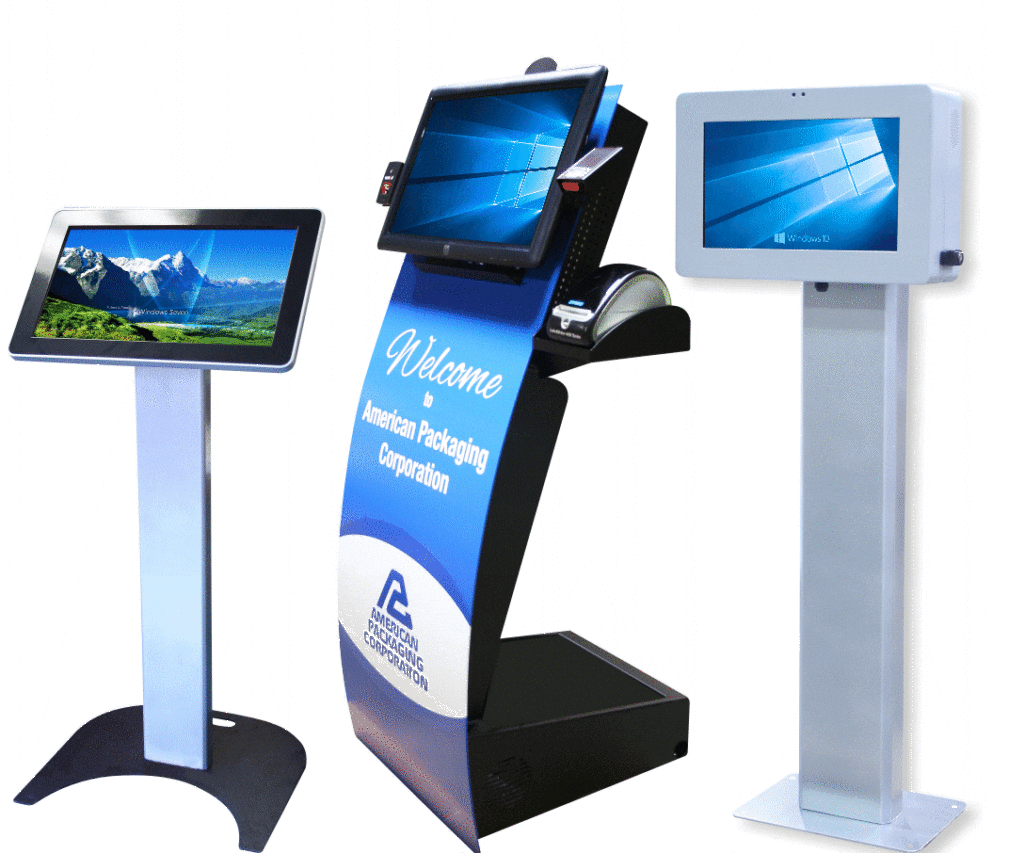
Branding via custom wraps, lighting, and UI themes, as in Nike’s store kiosks, adds $1,000-$5,000 but boosts engagement by 25% per Branding Science study (2021).
To implement effectively, consider these breakdown options:
- Hardware mods like logo etching on devices ($500), using laser tools for durability.
- Software skins via Adobe XD designs ($2,000), enabling quick theme prototypes.
- Full custom builds with 3D modeling in SolidWorks ($3,000-$10,000) for immersive experiences.
For instance, retail setups like Coca-Cola themed wraps add $4,000, while airport liveries (e.g., Delta-inspired) cost $6,000 extra. Adhere to Pantone color standards for consistency, and note McKinsey’s ROI data showing 15-20% brand recall increase through targeted visuals.
Durability and Enclosure Materials
Vandal-resistant enclosures from polycarbonate cost $800-$2,000, essential for high-traffic spots like NYC subway kiosks enduring 1M+ interactions yearly.
Selecting the right type depends on environment and threats. Consider these options:
- Indoor: ABS plastic models ($400, IK04 impact rating) suit controlled spaces like hotels, where a basic $600 unit handles daily crowds without excess durability.
- Outdoor: Aluminum enclosures ($1,500, IP66 waterproof, UV-resistant, NEMA 4X for harsh weather) fit airports, like a $2,200 installation enduring rain and vandalism.
- Industrial: Stainless steel ($2,500, IK10 high-impact) for factories facing heavy abuse.
A 2023 UL report highlights rugged models’ 50% longer lifespan, reducing replacement costs by up to 30% in demanding sites.
Installation and Deployment
Professional installation by vendors like Kiosk Industry Group runs $500-$2,000 per unit, including secure mounting for fixed setups in malls.
For reliable results, follow these steps and OSHA safety rules for work at heights (29 CFR 1910.23).
- Do a site survey (1-2 hours, $200) to check power outlets, network access, and foot traffic.
- Mount the unit securely to walls or floors using heavy-duty tools like Milwaukee M18 drills ($300 kit).
- Wire for Ethernet or PoE connections ($400, compatible with Cat6 cables).
- Test functionality for 24 hours, checking touchscreens and software.
Shipping adds $200-$500 via UPS for 100lb units.
Examples: A retail chain deployed 10 units for $5,000 total; airports opt for custom installs at $1,500/unit, per Kiosk Industry Group data.
Maintenance and Warranty Options
Companies like Sharp sell three-year warranty extensions for $500 to $1,500. These warranties stop equipment downtime from leading to costs that average $1,000 per day in retail businesses, based on a 2022 Aberdeen Group report.
Selecting the right warranty level depends on your needs. Basic coverage offers a 1-year included plan at $0, suitable for low-risk setups.
For better coverage, choose longer plans (3-5 years, about $800) that include on-site service, or SLA contracts ($2,000 per year) that promise 4-hour response times.
| Option | Duration | Cost | Key Features |
|---|---|---|---|
| Basic | 1 year | $0 | Standard manufacturer support |
| Extended | 3-5 years | $800 | On-site repairs |
| SLA | Annual renewal | $2,000/year | 4-hour response, priority service |
Sector-specific add-ons include HIPAA compliance for healthcare (+$1,200) or weather monitoring for outdoor use (+$1,000). Include vendor training sessions ($500) to help your internal team work better.
Gartner reports these reduce failures by 60%, minimizing disruptions.
Detailed Cost Breakdown
A typical kiosk’s TCO spans $3,000-$25,000 initially plus $1,000/year ongoing, as exemplified by a mid-range retail unit from DynaTouch totaling $8,500 over 3 years. Explore detailed breakdowns of interactive kiosk costs in 2025 to better estimate your specific setup.
Upfront Purchase and Manufacturing
Manufacturing costs for a basic kiosk start at $1,500 from Chinese suppliers like Shenzhen ITStouch, rising to $10,000 for U.S.-made custom units from Peerless-AV.
Key factors influencing costs include volume and minimum order quantity (MOQ).
For 10+ units, expect 15% discounts; MOQ of 50 can drop per-unit prices to $1,200 for mid-tier models.
Consider alternatives like self-service kiosks manufactured in Vietnam at $2,500 base, or high-end U.S. versions at $12,000.
| Category | Base Cost | Examples |
|---|---|---|
| Basic (China) | $1,500 | Shenzhen ITStouch standard touchscreen |
| Mid-tier (Vietnam) | $2,500 | Self-service info kiosk |
| High-end (U.S.) | $12,000 | Peerless-AV custom interactive |
To secure quotes, submit RFQs to three vendors via Alibaba and ThomasNet. According to 2023 Manufacturing.net data, imports save 20-30% over domestic production, but factor in tariffs and shipping.
Ongoing Operational Expenses
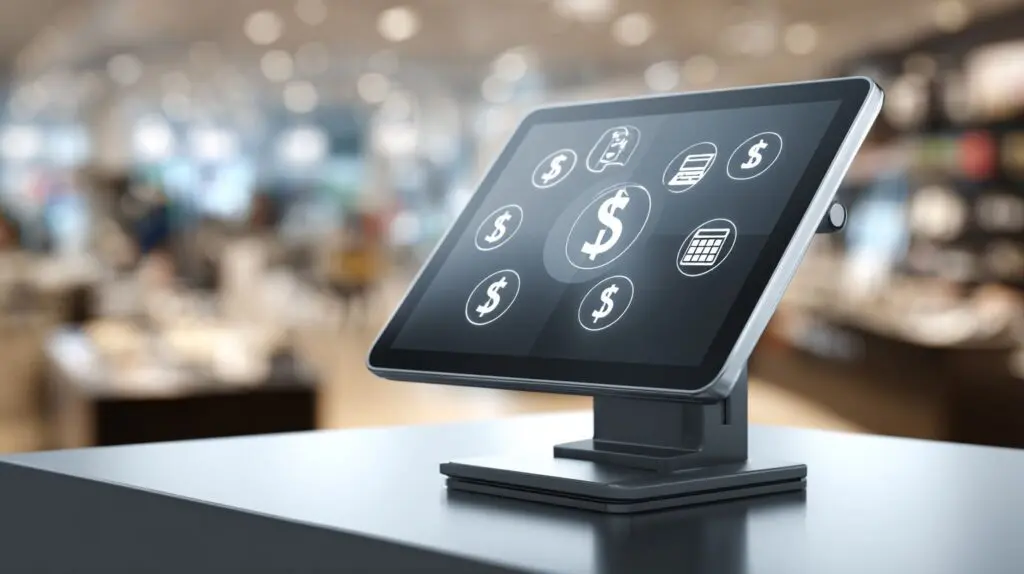
Annual ops run $500-$3,000, including electricity at $200/year for a 100W unit and software updates via AWS at $100/month.
Break down other key costs for efficient budgeting:
- Power (0.10/kWh rate): $150-$400 annually, depending on 8-12 hour daily usage; opt for Energy Star-rated units to save 20% per EPA guidelines.
- Software subscriptions: Microsoft Azure at $50-$500/month for scalable cloud processing, versus on-premise at 30% higher ops costs (2022 IDC study).
- Connectivity: 4G modem service around $300/year for reliable remote access.
- Updates: In-house maintenance at $1,000/year.
A restaurant chain with 10 kiosks spends $15,000 a year on operations. Switch to cloud solutions to keep costs consistent and handle growth with ease.
Hidden Costs and Add-Ons
Overlooked add-ons like PCI compliance certification add $2,000-$5,000, as seen in a bank kiosk project exceeding budget by 25% due to overlooked integration fees.
Other hidden costs often include
- integration (API development at $3,000 or using Zapier at $20/month for quicker setup),
- staff training (in-person sessions $800 or Udemy custom courses $500),
- GDPR compliance audits ($1,500 via certified firms),
- international shipping ($800 for hardware),
- and downtime insurance ($400/year from providers like Hiscox).
To mitigate overruns, always budget a 15% buffer.
For instance, a retailer faced a $10,000 FTC penalty in 2023 for non-compliant payments, underscoring the need for proactive compliance checks.
Average Price Ranges by Category
Kiosk prices segment into $1,500-$4,000 for entry-level, $5,000-$12,000 mid-range, and $15,000+ high-end, based on 2023 Kiosk Association survey of 200 deployments.
Entry-Level Basic Models
Entry-level models like the 22-inch Elo Touch basic unit cost $1,800-$3,500, ideal for low-volume info ADA compliant kiosks in small businesses.
To choose the right one, compare these four options:
| Model | Price | Key Features | Best For |
|---|---|---|---|
| Elo I-Series | $2,200 | 22in 1080p, Android kiosks OS, basic enclosure | Small retail |
| Advantech ARK | $1,900 | 22in HD, Windows, rugged case | Outdoor kiosks |
| Samsung Smart Signage | $2,500 | 24in FHD, Tizen OS, slim bezel | Hotel lobbies |
| LG WebOS Touch | $3,000 | 22in 1080p, WebOS, multi-touch | Interactive displays |
Elo offers quick setup (1 hour) but limited peripherals. For bulk buys, source from Alibaba at ~$1,500/unit.
ROI example: A hotel info kiosk recoups costs in 4 months through 10% staff efficiency gains, per IDC studies on digital signage.
Mid-Range Versatile Kiosks
Mid-range choices include the 32-inch Advantech kiosk, priced at $6,000 to $9,000. It processes payments and shows information for retail and hospitality settings.
Equipped with Intel Core i5 processors, capacitive touchscreens, and Windows 10 IoT OS, the Advantech Windows kiosks model integrates EMV-compliant card readers and RFID integration for secure payments via Stripe or PayPal APIs-setup takes about 2 hours using their SDK.
In retail, use it for self-checkout to cut lines by 30% and achieve impressive ROI for kiosks, based on a 2022 NCR study about kiosk performance. In hospitality, pair with Toast POS for menu browsing and ordering, boosting table turnover 15%.
Comparable alternatives include Elo’s 32-inch I-Series ($5,500), ADA compliant kiosks with NFC support, or Diebold Nixdorf’s Vynamic ($7,200), Windows kiosks for multilingual interfaces. Consider Android kiosks for a range of options. You can scale them using cloud management tools like KioWare.
High-End Custom Solutions
High-end custom AI-powered kiosks, like weatherproof 55-inch units from Frank Mayer for airports costing $15,000-$30,000, feature AI and rugged builds.
To implement these, start by assessing needs like passenger volume, RFID integration, and IoT integration with systems such as Azure for cloud scalability.
Main suppliers provide custom choices with bulk discounts (20% off for 100 or more units).
For actionable comparison, consider this overview of models suited for airports:
| Model | Price | Key Features | Best For |
|---|---|---|---|
| Frank Mayer Weatherproof | $15,000-$30,000 | AI processing, IP65 ruggedness, 55-inch touchscreen | High-traffic check-ins |
| Olea Custom Outdoor | $22,000 | 55in display, i7 processor, Linux OS, vandal-resistant, 4G, camera, API | Outdoor deployments |