



Affordable HR Software Options for Startups on a Budget
Finding the right affordable HR software doesn’t have to drain your startup budget. When you face the difficulties of expanding a business, affordable HR tools can greatly help. You will learn about important workforce management features, find affordable HR options such as Gusto and BambooHR, and receive practical tips for putting them into action. Want to make your cloud HR solutions more efficient without spending too much? Let’s look for and find the answers that fit your startup’s needs.
Importance of Startup HR Solutions
HR software is important for startups, providing tools that improve productivity, better manage employee systems, and help them comply with regulations from the start.
Important parts of our service include payroll software, which works out salaries and subtracts taxes to make sure payments are timely and comply with tax regulations. Tools like Gusto make it simple for businesses to handle payroll and use automatic HR tasks quickly.
Employee self-service portals let staff manage their own personal information updates and benefits enrollment, enhancing the efficiency of the HR software. BambooHR provides an easy-to-use platform for these tasks.
Compliance management tools help startups adhere to labor laws. Products like Zenefits inform users about updates in legislation affecting their business, lowering legal risks and providing confidence. If interested, you can explore insights on HR software costs in 2025 to better understand the financial aspects of adopting these solutions.
Startup HR Challenges
Startups often face unique challenges in HR, including limited budgets, high employee turnover, and the need for effective recruitment software strategies.
To effectively tackle these challenges, startups can implement targeted HR solutions strategies.
To hire without spending too much, using LinkedIn or job boards like Indeed can be a way to save money. Using employee referral programs and recruitment automation tools can reduce hiring costs while improving candidate quality.
To reduce high turnover, regularly asking employees about their job satisfaction using employee feedback tools can give helpful feedback. Using flexible work schedules and providing chances for professional growth help in bringing in talent and keeping them for longer, contributing to employee engagement software benefits.
These methods help create a more dedicated workforce, important for long-term success.
Compare Quotes
Essential HR Tools for Startups
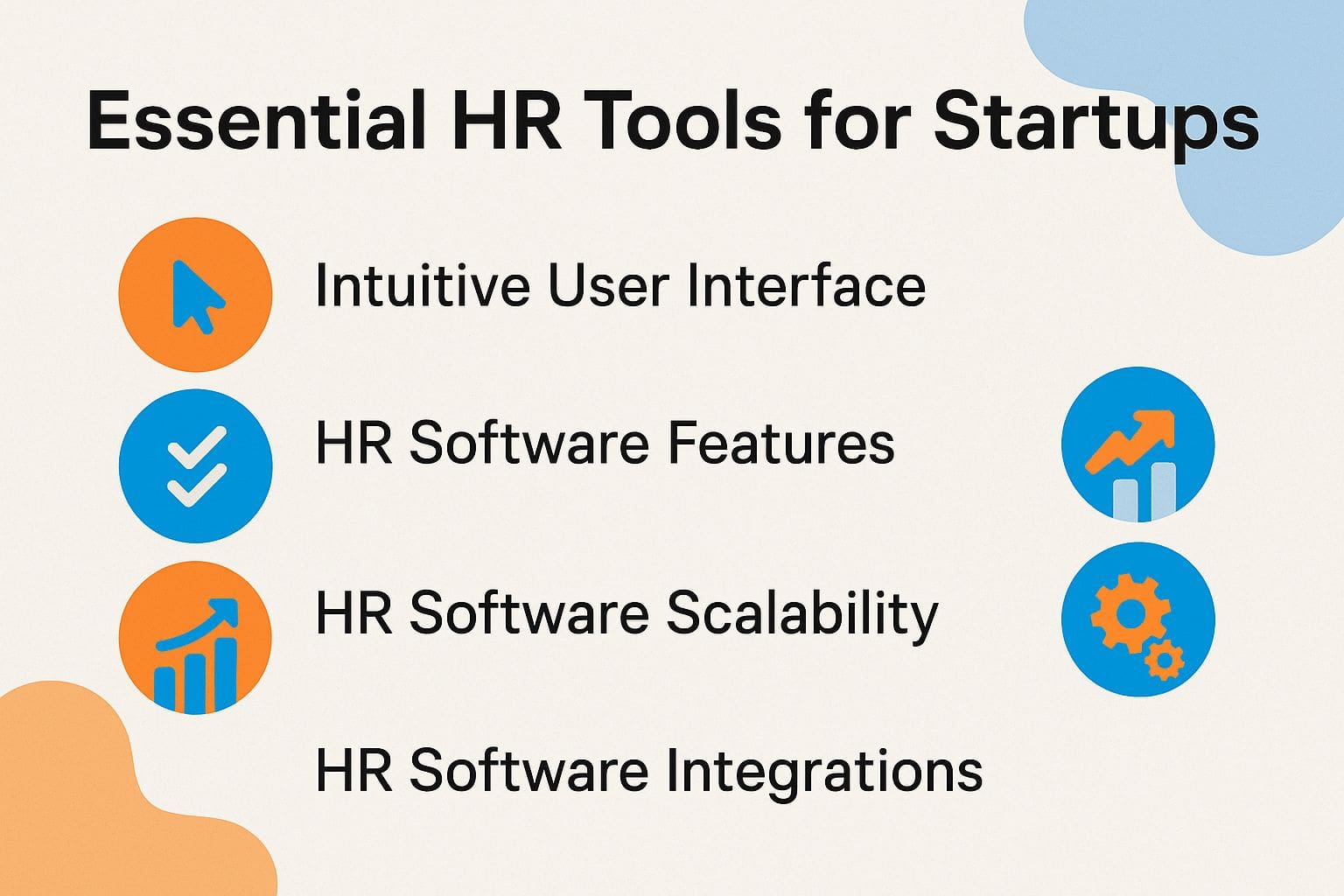
Choosing the right HR software means knowing essential features that can improve processes without spending too much.
Intuitive User Interface
An intuitive user interface is important because it helps staff use the system with ease, resulting in more people choosing to use it.
To evaluate HR software interfaces effectively, consider tools like Gusto and BambooHR, which offer customizable HR software options.
Gusto features a clean dashboard that simplifies payroll and benefits management, ensuring users spend less time searching for information. BambooHR provides simple tools that allow you to quickly view employee records and performance reviews.
Both tools score high on ease of use, but Gusto excels in its visually appealing design. Choose software that fulfills your needs and creates a workplace where employees feel at ease, which in turn increases productivity.
HR Software Features
Critical HR functions such as payroll management, benefits administration software, and compliance management tools can significantly impact operational efficiency.
To make these processes more efficient, using specialized software is necessary.
Paychex Flex is a tool that simplifies the onboarding process by handling paycheck processing and tax calculations automatically. It ensures payments are made on time and with minimal mistakes.
Gusto makes benefits administration software processes easier by streamlining enrollment and handling compliance tasks, helping employees grasp their choices better.
For compliance tracking, Zenefits provides tools to monitor regulatory changes and maintain proper documentation.
Picking the right software for your business can significantly improve the efficiency and accuracy of HR tasks.
HR Software Scalability
Using scalable HR solutions means your HR systems can expand as your business does, avoiding expensive changes later.
Zoho People exemplifies scalable HR solutions, allowing startups to add modules such as performance management tools or recruitment software seamlessly as their needs evolve.
Users can begin with basic features and slowly add advanced tools like AI-powered HR analytics tools or employee scheduling software. This flexibility lets businesses raise user limits without causing major interruptions.
The platform’s simple dashboard makes it easy for teams to handle HR tasks with little need for training or support.
HR Software Integrations
Linking easily with other business applications is important for better HR software connections and simplifying work processes.
For example, Justworks connects with well-known accounting software like QuickBooks and Xero. This connection simplifies payroll tasks and provides correct financial reports.
This means that when you add a new employee, their information updates across both platforms, eliminating manual data entry.
Tools like Zapier can connect Justworks with other apps, enabling automatic HR tasks such as informing your team when payroll is done.
Using these integrations reduces errors and makes processes more efficient, saving time.
Compare Quotes
Best HR Software for Startups
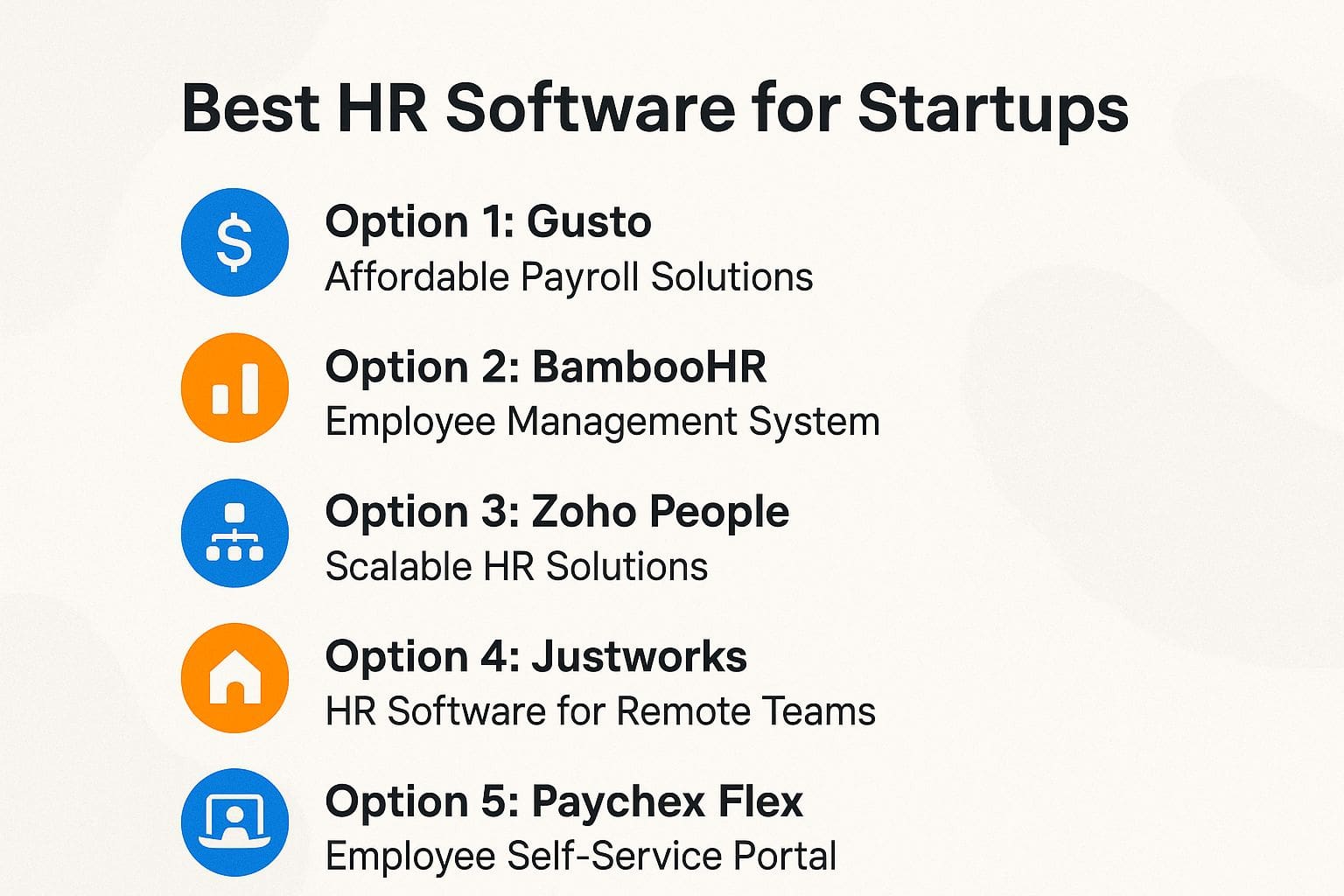
There are many budget-friendly HR software choices available that meet the specific needs of startups while still offering full functionality.
Option 1: Gusto – Affordable Payroll Solutions
Gusto offers an intuitive user-friendly HR software platform starting at $39/month plus $6 per employee, combining payroll, employee onboarding software, benefits, and HR tools in one solution.
It makes payroll tasks easier by doing calculations and filing taxes automatically, a key aspect of cost-efficient talent management, helping startups follow the rules.
Gusto allows employees to start their own onboarding process, provides flexible options for benefits packages, and simplifies performance reviews.
For startups with fewer than 50 employees, this platform stands out because it is easy to use and has strong customer support.
Many users report saving hours each month, which can be redirected toward growth initiatives, showcasing the effectiveness of subscription-based HR tools.
Gusto’s connection with QuickBooks and Xero improves accounting tasks, offering a complete solution for new businesses.
Option 2: BambooHR – Employee Management System
BambooHR provides an employee management system solution starting at $99 per month for up to 12 employees, focusing on user experience and essential HR functions.
Its advantages are smooth employee onboarding, easy performance tracking, and a user-friendly interface that makes it simple to use.
BambooHR provides templates that make it easier to handle paperwork for new employees, helping them feel comfortable.
Features such as employee self-reviews and performance review software goal-setting tools improve performance management by encouraging openness and participation.
The easy-to-use dashboard allows HR managers to monitor key employee details, helping them create reports for better decisions.
BambooHR is designed to improve the HR experience for all users.
Option 3: Zoho People – Scalable HR Solutions
Zoho People costs $1 per employee each month, providing scalable HR solutions and key HR tools for startups and small businesses.
The recruitment module simplifies hiring by letting you post jobs on platforms such as LinkedIn and Indeed, handle applications, and work together with colleagues, highlighting its recruitment automation tools.
The time tracking software feature lets employees record their work hours easily and provides information about productivity.
Zoho People integrates effortlessly with other tools like Zoho CRM and Slack, enhancing overall workflow.
To get the most out of their efforts, startups should create specific workflows and handle repetitive tasks automatically. This allows HR to concentrate on important projects while keeping operations efficient.
Option 4: Justworks – HR Software for Remote Teams
Justworks simplifies HR by providing PEO services at a starting cost of $49/month per employee, covering payroll, compliance, and benefits.
Justworks manages payroll software tasks and helps businesses follow local and federal laws for compliance.
Clients can get health insurance plans, retirement savings options, and extra benefits like pre-tax commuter savings to improve employee happiness.
Justworks features a user-friendly platform where business owners can manage their workforce easily, track time off, and generate necessary reports.
This method saves time and lowers the challenging risks associated with HR tasks, making it a suitable choice for small businesses looking for cloud HR software.
Option 5: Paychex Flex – Employee Self-Service Portal
Paychex Flex provides payroll services for $60/month, including employee self-service and tools for generating reports.
Paychex Flex offers important HR software capabilities designed specifically for small businesses, in addition to handling payroll. These include processes that automatically handle employee onboarding, using online documents and electronic signatures. This follows guidelines and saves time.
The platform helps business owners easily handle health insurance, 401(k) plans, and other employee benefits.
With dedicated customer support, users can reach informed staff through phone, chat, or email for quick answers to questions, which is important for keeping operations running smoothly.
Compare Quotes
HR Software Comparison
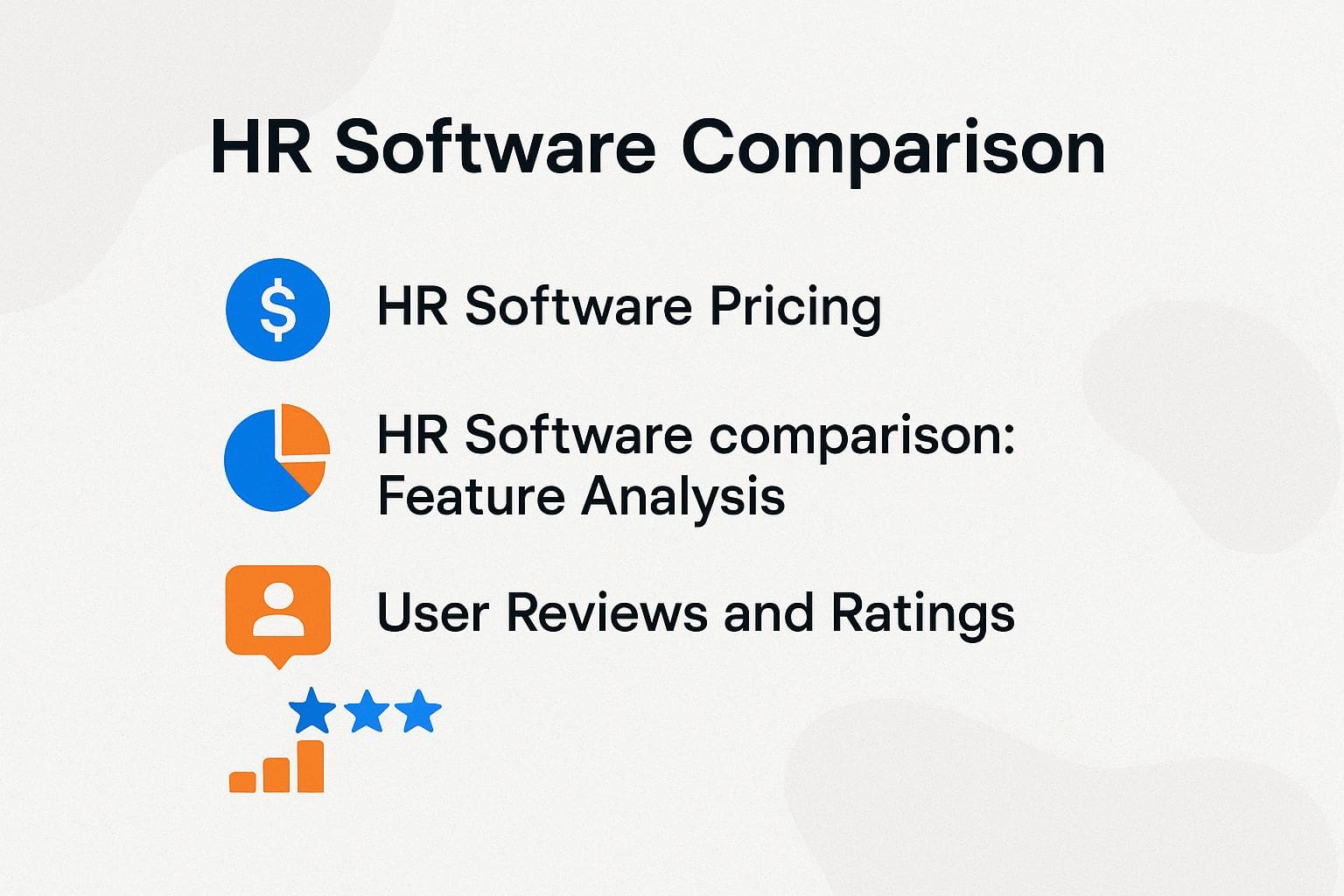
Looking at the costs and features of chosen HR software helps startups decide wisely on their purchase. For those considering the budget implications, discover how much HR software costs in 2025 to make an informed decision.
HR Software Pricing
Knowing HR software pricing structures can help startups choose options that match their budget while keeping all the necessary features for effective HR solutions for startups.
Here’s a comparison of key HR software options:
| Software | Starting Price | Key Features |
|---|---|---|
| Gusto | $39/month | Payroll processing, employee benefits |
| BambooHR | $99/month | Time tracking, performance management |
| Zoho People | $1/employee | Applicant tracking, self-service portal |
| Justworks | $49/month | Compliance assistance, worker benefits |
| Paychex Flex | $50/month | Payroll tax management, time management |
Choose according to your business requirements and budget, using low-cost HR software to make procedures more efficient.
HR Software Comparison: Feature Analysis
A feature comparison reveals how each software aligns with the HR needs of startups, ensuring they choose the best fit.
The following table highlights key functionalities across three popular HR software options for startups: BambooHR, Gusto, and Zenefits.
| Feature | BambooHR | Gusto | Zenefits |
|---|---|---|---|
| Payroll Processing | Yes | Yes | Yes |
| Employee Management | Strong focus | Basic tools | Comprehensive |
| Compliance | Limited | Integrated | Full suite |
Choosing from this comparison helps startups prioritize important tasks, like managing payroll and staying compliant, by using online HR tools to work better.
User Reviews and Ratings
HR software reviews provide helpful information about how well different HR software works and how satisfied users are.
For instance, G2 highlights BambooHR for its user-friendly interface and strong reporting features, with many users praising its onboarding process.
On the other hand, Capterra describes Workday as a strong option for bigger companies due to its complete HR management tools, but some users mention it takes time to learn.
Zenefits receives positive feedback for its seamless integration with payroll systems, yet a few users mention occasional glitches.
When selecting an HR software, consider the size of your organization and specific features that align with your needs, ensuring cost-effective HR options for your startup.
Compare Quotes
HR Software Implementation Tips for Startups
To get the most out of HR software for startups, it’s important to plan and carry out the implementation process carefully. An effective implementation can also help in avoiding common HR compliance issues that many employers face.
Setting Up the Software
To install HR software, follow these main steps to guarantee all features function correctly and are accessible.
- Begin by identifying your main HR needs, such as hiring staff, handling payroll, or managing employee performance, with technology-driven HR processes to improve how work gets done.
- Select a software solution that caters to these needs; popular options include BambooHR for small businesses and SAP SuccessFactors for larger enterprises, providing scalable HR solutions.
- Once you’ve chosen your software, allocate about 2-4 hours for the initial setup, focusing on integrating existing employee data and configuring essential HR processes.
- Common mistakes include ignoring user permissions and not testing the system completely before launch, so make sure these aspects are covered.
Training Your Team for HR Solutions
Make sure to train your team thoroughly so they can use the new HR software and its features well, enhancing remote workforce management capabilities.
To achieve this, consider implementing a mix of training methods. Start with structured workshops led by an experienced facilitator, which can help build a foundation.
Complement these with online tutorials from platforms like LinkedIn Learning or Coursera, offering flexibility for team members. Establishing a knowledge base with FAQs and step-by-step guides on your intranet can provide ongoing support, utilizing collaboration tools in HR software.
Plan training sessions every few months to review recent updates and build skills, so your team stays confident and capable.
Compare QuotesCommon Mistakes to Avoid in HR Software Usage

By steering clear of typical errors when setting up HR software, startups can conserve time and resources, resulting in a smoother HR process and better digital employee experience.
Overlooking User Experience in HR Platforms
If we don’t consider user opinions about the system, fewer people will use it. This can make HR tasks more difficult and lower employee happiness, which affects the analysis of employee satisfaction.
To improve ease of use in HR software, focus on features like easy movement through the app, personalizable dashboards, and smooth mobile access, utilizing mobile HR applications.
For instance, an intuitive onboarding wizard can help users quickly familiarize themselves with essential functions. Software like Gusto offers a mobile app that allows employees to manage their payroll and benefits on the go, promoting engagement and offering HR software capabilities for remote teams.
Select tools that offer analytics features too; this allows HR staff to evaluate usage and make changes based on the data, creating a more user-friendly setting.
Ignoring Integration Needs in HR Systems
Failing to consider integration needs can limit the effectiveness of HR software, leading to disjointed HR processes and data silos, impacting data security in HR software.
To make HR software work better, focus on tools that easily connect with other systems. For example, BambooHR seamlessly connects with payroll systems like Gusto, streamlining employee data management.
In the same way, connecting ATS tools like Greenhouse with your HR platform can make sure that recruitment data moves seamlessly, improving candidate tracking.
Evaluate the API capabilities and customer support in HR software to troubleshoot potential issues, ensuring a cohesive ecosystem. Regularly review these connections as your business expands to find more ways to make things work better, using HR software connections for smooth operations.
About The Author
Jordan Blake is a B2B strategist and contributor at Price It Here, where she shares expert advice on buying decisions and business growth. She holds a Bachelor’s in Business Administration from the University of Michigan and an MBA from Northwestern’s Kellogg School of Management.
With over a decade of experience in procurement and vendor strategy, Jordan helps businesses save money and scale smarter. Her practical insights make her a trusted voice for entrepreneurs seeking cost-effective, results-driven solutions.
