



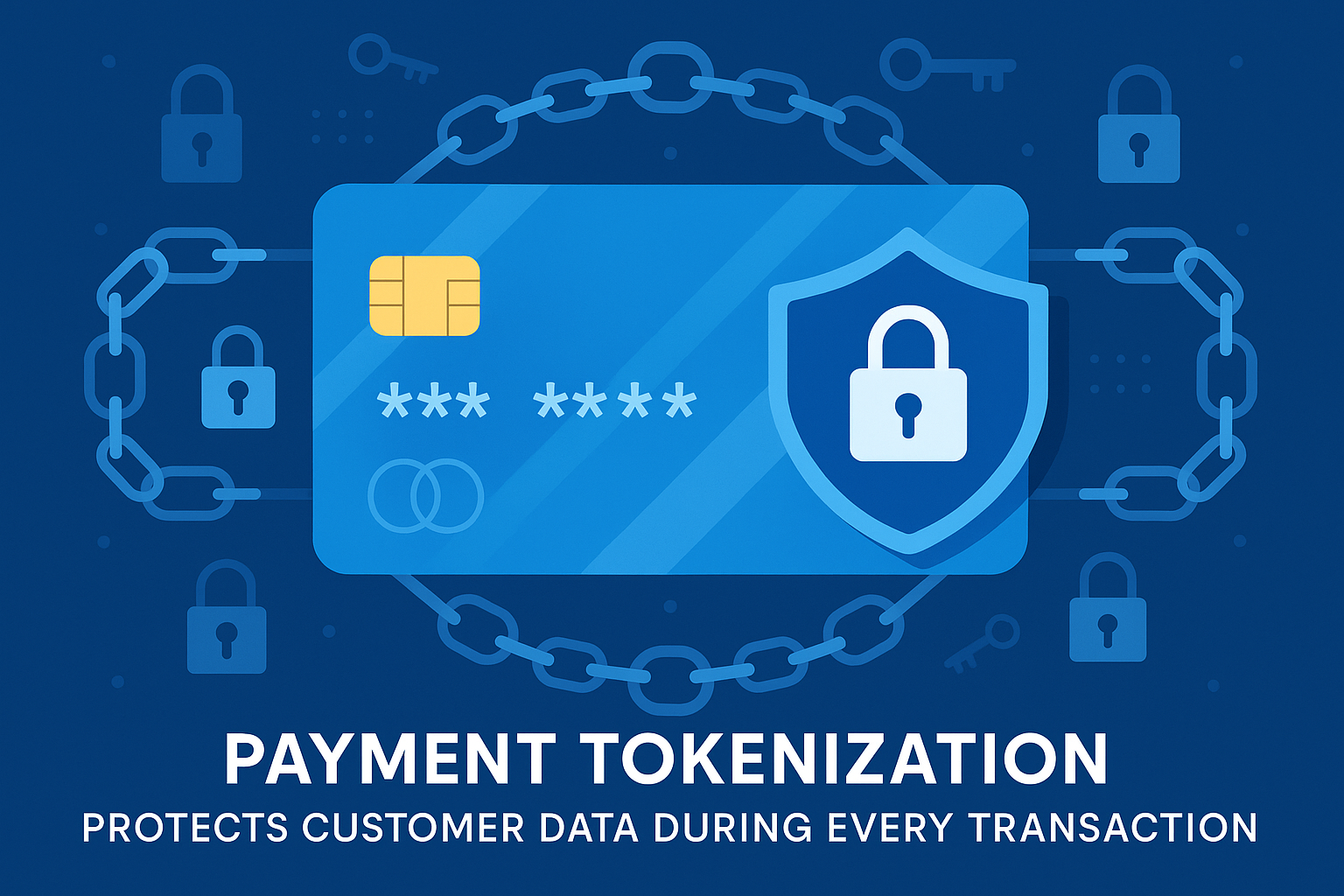
How Payment Tokenization Protects Customer Data During Every Transaction
In today’s digital marketplace, protecting customer payment data is no longer optional—it’s a core part of building trust, maintaining compliance, and protecting your business from financial and legal risks. Every time a customer swipes, taps, or enters a credit card online, their sensitive payment details pass through multiple systems. Without the right safeguards, that data can become a hacker’s jackpot.
That’s where payment tokenization comes in. It’s one of the most advanced methods of securing transactions from end to end, ensuring sensitive cardholder information is never exposed—even if the system is compromised.
In this guide, I’ll explain exactly how tokenization works, why it matters for your business, and which credit card processors currently lead the way in offering secure, tokenized payment environments that meet today’s PCI DSS and data privacy standards.
Understanding Payment Tokenization
Payment tokenization is a data security process that replaces sensitive information—like a credit card’s 16-digit primary account number (PAN)—with a random, unique identifier known as a token.
That token holds no real value outside the payment ecosystem, meaning if a hacker intercepts it, it’s useless. Only the token vault (a secure server managed by the processor) can map the token back to the original data.
Think of it like replacing the real key to your house with a temporary, coded badge. That badge can unlock the door for authorized people, but if it’s lost or stolen, no one can use it to get inside.

Why Tokenization Is Essential For Every Merchant
Credit card breaches can devastate a business. Beyond the cost of remediation and legal exposure, there’s the erosion of customer trust that can take years to rebuild. Tokenization helps stop that risk before it starts.
Here’s why every business that accepts cards—online or in person—should use tokenization:
-
Protects sensitive data at the source: Card numbers, CVVs, and expiration dates are replaced before they’re stored or transmitted.
-
Reduces PCI DSS scope: Because actual cardholder data isn’t stored on your systems, your compliance burden (and cost) drops dramatically.
-
Prevents mass data breaches: Even if a database or cloud system is compromised, attackers can’t decrypt tokenized data.
-
Enables secure recurring billing: Tokens can be reused for authorized transactions like subscriptions or refunds without re-entering card info.
-
Supports omnichannel security: Whether your customer pays online, in-store, or through a mobile device, their data is protected under the same encryption framework.
How Tokenization Differs From Encryption
Encryption and tokenization are often used together, but they aren’t the same thing.
Encryption scrambles data into unreadable code that can be decrypted with a key. Tokenization, on the other hand, removes the sensitive data altogether and replaces it with a placeholder.
The key difference?
-
Encryption is reversible (with the key).
-
Tokenization is irreversible without access to the secure token vault.
This makes tokenization particularly powerful for credit card processors because even if a cybercriminal breaches the network, there’s no decryptable data to steal.
The Tokenization Process Step-By-Step
To visualize how payment tokenization works in real time, let’s walk through a transaction from start to finish:
-
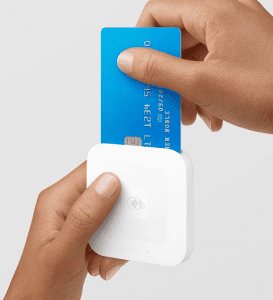
The Customer Enters Payment Info
Whether online or via POS terminal, the customer enters or swipes their card details. -
Sensitive Data Is Sent To The Processor
The processor’s secure environment receives the raw payment data over an encrypted channel. -
The Processor Generates A Token
The system replaces the card’s PAN and sensitive details with a randomized alphanumeric token (liketk_5a93g3b2h1). -
The Token Is Stored Instead Of The Card Number
Your systems store and transmit only the token, not the actual card information. -
The Token Vault Links The Token To The Card
The real card details live securely inside the processor’s vault. When a follow-up transaction (refund, subscription, etc.) occurs, the vault maps the token back to the correct account. -
Authorization Completes Normally
From the customer’s perspective, everything feels seamless—the transaction processes as usual, but their real card info never sits inside your system.
Key Benefits Of Tokenization For Businesses
The impact of tokenization extends beyond security—it influences your compliance costs, customer experience, and business scalability.
1. Reduces PCI DSS Compliance Scope
Because your business never stores or transmits actual card data, your PCI DSS self-assessment questionnaire (SAQ) scope shrinks dramatically. That saves hours in audits and thousands in compliance costs.
2. Simplifies Recurring And Subscription Billing
Tokens can be stored for future authorized use—perfect for membership models, recurring donations, or automated payments. Since the tokens never expire, customers experience fewer payment interruptions.
3. Improves Consumer Confidence
When customers see “secured by tokenization” or similar language on your payment page, it builds immediate trust. They know their data isn’t being stored where it can be compromised.
4. Enables Future-Proof Payment Innovation
Tokenization makes it easier to integrate with digital wallets, mobile payments, and EMV systems. Many processors now use network tokenization, which ties tokens to specific devices, further enhancing security.
5. Supports Global Privacy Compliance
Tokenization aligns with data minimization principles under GDPR, CCPA, and similar laws, reducing exposure of personally identifiable information (PII).
Top Credit Card Processors That Offer Tokenization
The good news? Most major credit card processors have embraced tokenization at the core of their platforms. Below are some of the most trusted providers offering robust, scalable tokenization for businesses of all sizes.
1. Stripe
Stripe uses network tokenization and PCI Level 1 compliance, providing dynamic tokens for every transaction. Its API-first design makes it ideal for online and app-based businesses.
-
PCI DSS Level 1 certified
-
Tokens support recurring payments and customer profiles
-
Supports Apple Pay, Google Pay, and EMV chip transactions
2. Square
Square automatically tokenizes every card stored in its ecosystem—both for recurring payments and saved cards.
-
End-to-end encryption with automatic token generation
-
Ideal for small businesses and retail POS setups
-
Integrated fraud detection tools
3. Adyen
Adyen’s global platform uses network-issued tokens that connect across channels (online, in-store, mobile). It’s one of the most advanced omnichannel processors for enterprises.
-
Network tokenization via Visa, Mastercard, and Amex
-
Dynamic 3D Secure authentication
-
GDPR-aligned global data protection
4. Authorize.Net (a Visa Solution)
Authorize.Net provides tokenization and customer information manager (CIM) tools for recurring billing.
-
PCI DSS Level 1 certified
-
Ideal for SMBs and subscription-based businesses
-
Secure hosted payment forms to reduce compliance burden
5. Worldpay From FIS
Worldpay combines tokenization with AI-driven fraud prevention. Its architecture supports merchants in healthcare, hospitality, and finance who handle sensitive payment data daily.
-
Supports PCI DSS 4.0 and encryption in transit
-
Secure token vault system
-
Extensive integration with POS and ERP platforms
6. Braintree (A PayPal Company)
Braintree offers built-in tokenization that integrates seamlessly with e-commerce platforms like Shopify, WooCommerce, and Magento.
-
Customer vault with token reuse capabilities
-
PCI-compliant recurring billing
-
Strong fraud detection and chargeback management tools
7. Clover
Clover’s tokenization system is designed for brick-and-mortar retailers, ensuring transactions stay encrypted through every stage.
-
EMV-ready POS systems
-
Tokens used across terminals and mobile readers
-
Automatic PCI compliance via encryption and storage reduction
Tokenization In Omnichannel Payments
In today’s payment ecosystem, customers move freely between online and in-person shopping experiences. Tokenization plays a critical role in tying all those channels together under a single, secure identity.
For example:
-
A customer buys online using their saved card.
-
They later return or exchange the item in-store.
-
The system recognizes their token across both environments, linking the transaction history securely.
This unified commerce model not only improves convenience but also ensures that no real card data is ever exposed, even across multiple systems and networks.
Compliance Standards Supported By Tokenization
Tokenization supports several major global compliance frameworks, helping businesses operate safely across jurisdictions.
PCI DSS (Payment Card Industry Data Security Standard)
Tokenization reduces the need for merchants to store or transmit actual cardholder data, significantly narrowing PCI DSS scope and audit complexity.
HIPAA (For Healthcare Payments)
For healthcare organizations that accept card payments, tokenization ensures payment systems don’t expose PHI or sensitive payer information.
GDPR And CCPA
Tokenization aligns with data minimization and anonymization principles required by global privacy laws. Since tokens can’t be traced back to an individual without access to the vault, your systems stay compliant by design.
SOC 2 And ISO 27001
Most tokenization-ready processors operate within SOC 2 and ISO 27001 frameworks, ensuring enterprise-grade data management and encryption standards.
How Tokenization Protects Mobile And Contactless Payments
Mobile wallets like Apple Pay, Google Pay, and Samsung Pay rely entirely on tokenization for security. Each transaction generates a dynamic token specific to that device and that moment in time.
-
If hackers intercept the token, it can’t be reused.
-
The device never shares the actual card number with merchants.
-
Each token is validated through biometric or device-level authentication.
By using processors that integrate with these systems, you add another layer of real-world security to your checkout experience.
Tokenization Vs. Fraud Prevention Tools
While fraud detection and tokenization are both crucial, they serve different purposes.
-
Fraud detection identifies suspicious behavior or chargeback risks.
-
Tokenization prevents the theft of usable card data altogether.
When used together—especially through processors like Stripe, Adyen, and Worldpay—you get a multi-layered defense that protects both your business and your customers.
Common Myths About Tokenization
Let’s clear up a few misconceptions that often come up during processor selection:
-
Myth 1: Tokenization Slows Transactions
In reality, tokenization happens instantly and is invisible to customers. -
Myth 2: Only Large Enterprises Need It
Even small retail or service businesses are prime targets for hackers; tokenization protects businesses of every size. -
Myth 3: Tokens Can Be Reverse Engineered
They can’t. Tokens contain no mathematical relationship to the original card data and are generated using secure randomization algorithms. -
Myth 4: Tokenization Replaces Encryption Entirely
It doesn’t replace—it complements. Most secure processors use both for layered protection.
The Business Case For Tokenization
Investing in a processor that supports tokenization isn’t just about compliance—it’s about competitive advantage.
Improved Reputation
Consumers trust businesses that advertise secure checkout systems. Security badges and mentions of tokenization can improve conversions and brand loyalty.
Lower Liability
By reducing the storage of raw card data, your business removes itself from many liability pathways in the event of a breach.
Simplified IT Maintenance
When payment data doesn’t live in your environment, system upgrades, migrations, and audits become much simpler and faster.
Scalable Growth
Tokenization-ready processors easily integrate with new e-commerce platforms, CRM systems, and analytics tools, letting you grow without increasing risk.
Future Trends In Payment Tokenization
The next evolution of tokenization will be network-level integration, where Visa, Mastercard, and Amex issue unique tokens tied to each consumer and device.
-
Dynamic Token Lifecycle: Tokens that automatically expire and refresh after set intervals.
-
AI-Assisted Vault Management: Intelligent mapping and validation of tokenized data across systems.
-
Open Banking And Instant Payments: Tokenization will extend to ACH, real-time payments, and cross-border settlements.
-
Consumer-Controlled Tokens: Customers will manage, revoke, and authorize tokens directly through digital wallets.
This evolution moves payment tokenization from being a security layer to a central pillar of identity and trust in the global financial ecosystem.
How To Choose The Right Tokenization-Enabled Processor
When evaluating credit card processors, use these criteria:
-
PCI DSS Level 1 Certification
Only choose processors that meet the highest PCI tier. -
Transparent Security Documentation
Look for published details on encryption, tokenization methods, and audit standards. -
Integration Capabilities
The best processors offer easy integration with your shopping cart, CRM, and accounting platforms. -
Omnichannel Support
Choose a processor that provides the same token across mobile, in-store, and online channels. -
Fraud Protection Suite
Tokenization should work alongside machine learning-based fraud analysis. -
Scalability
As you grow, your processor should handle more transactions without sacrificing performance.
Final Thoughts
Payment tokenization isn’t just a technology—it’s the foundation of modern payment security. Every business that accepts cards, from local clinics to global retailers, benefits from removing raw payment data from their systems.
Credit card processors like Stripe, Adyen, Worldpay, Authorize.Net, and Braintree have set the new standard by making tokenization automatic for every transaction.
If your current processor doesn’t offer this protection, it’s time to reconsider your options. In a world where one breach can cost millions and permanently erode customer trust, tokenization isn’t a luxury—it’s a necessity.
By choosing a payment processor that prioritizes tokenization, you protect your customers, your reputation, and your business’s long-term success—one secure transaction at a time.
About The Author
Jordan Blake is a B2B strategist and contributor at Price It Here, where she shares expert advice on buying decisions and business growth. She holds a Bachelor’s in Business Administration from the University of Michigan and an MBA from Northwestern’s Kellogg School of Management.
With over a decade of experience in procurement and vendor strategy, Jordan helps businesses save money and scale smarter. Her practical insights make her a trusted voice for entrepreneurs seeking cost-effective, results-driven solutions.
