



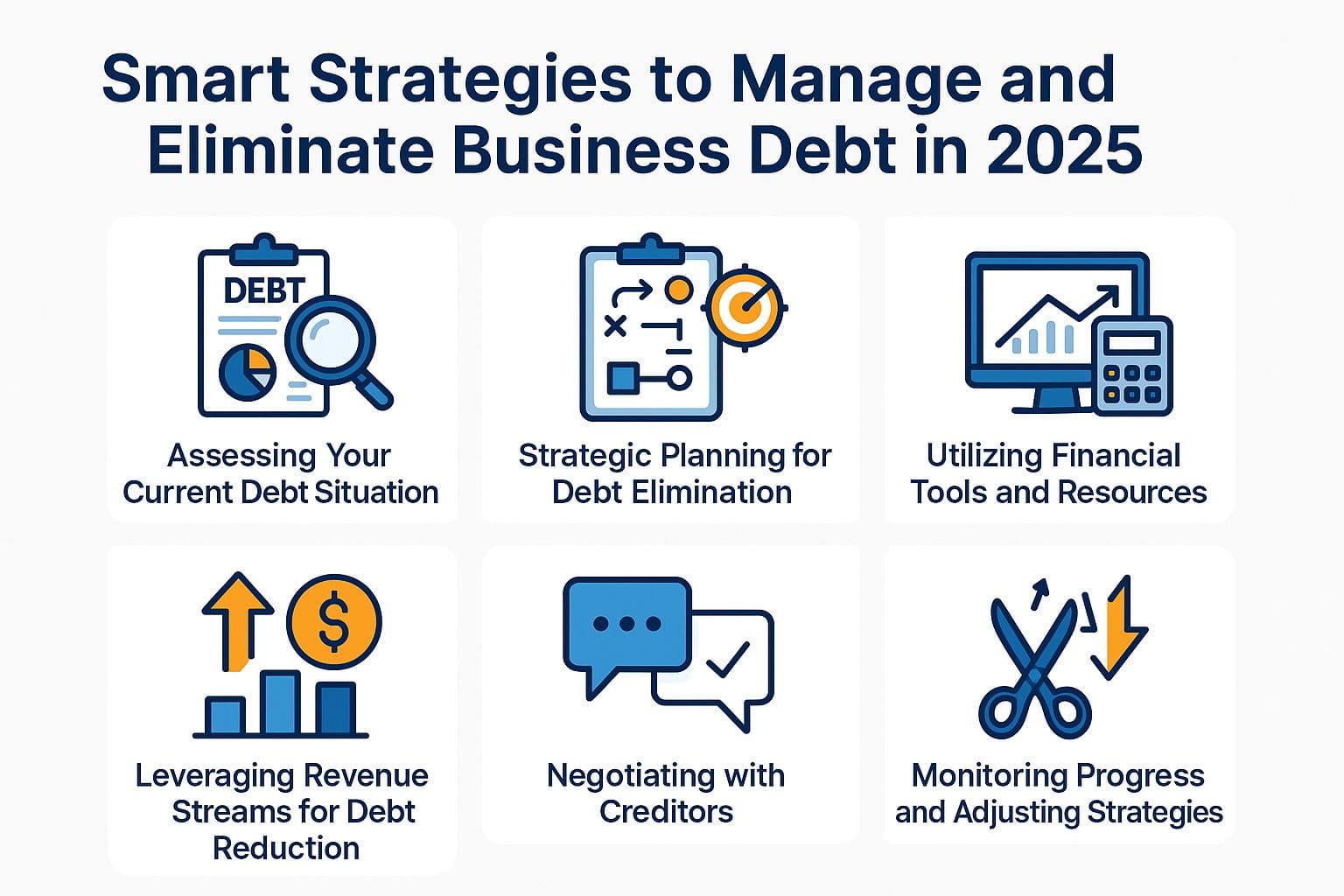
Smart Strategies to Manage and Eliminate Business Debt in 2025
Debt can feel like a heavy anchor dragging your business down. However, in 2025, you can change the situation with effective plans to take back control. Knowing about your debt and what it means is very important. You’ll learn to evaluate your present financial situation, establish specific objectives, and put successful repayment strategies in place. Learn how to use tools and talk to creditors with practical steps to get rid of business debt and create a successful path ahead. Curious about how to break free? Keep reading!
Business Debt and Financial Plans
Business debt can be divided into different types like secured loans, unsecured loans, and credit lines. Each affects cash flow management in its own way.
- Secured loans, like a mortgage for a business property, need something of value as security, reducing the risk for lenders. This is often favorable for businesses needing substantial upfront capital, like purchasing equipment.
- Unsecured loans, on the other hand, do not require collateral but may come with higher interest rates, ideal for covering immediate operational costs.
- Lines of credit provide flexible access to funds as needed, which is useful for managing fluctuating cash flow.
Knowing these options can help businesses choose alternative financing solutions for their unique needs. For those interested in how lenders assess these financing options, our insights into alternative lending practices offer valuable information.
The Importance of Managing Debt
Good debt management can improve your credit score and keep your cash flow steady, enhancing your financial planning strategies.
By focusing on paying off high-interest debts like credit cards first, people can greatly reduce their total debt.
For instance, consider employing the snowball method: start with the smallest debt, pay it off, and then apply that payment to the next smallest, utilizing effective payment plans.
Research indicates that people who take control of their debt are 70% less likely to go bankrupt, leading to more stable finances and better ability to borrow money long-term.
Tools like Mint or You Need a Budget can help track spending and set up practical budgeting techniques for paying off debt.
Assessing Your Current Debt Situation
A detailed look at your current debt is the basis for effective debt management, debt elimination, and reduction plans. This analysis often contrasts with established best practices for effective debt collection, which can offer insights into strategic approaches for debt reduction.

Identifying Types of Debt
Begin by identifying the various types of debts your business holds, including short-term and long-term financial obligations.
Short-term debts, such as credit lines and accounts payable, impact immediate cash flow, often requiring repayments within a year. For example, if your business has a $10,000 line of credit, high interest can diminish your available cash if not managed carefully.
Debts such as mortgages or equipment loans involve payments over many years and affect long-term financial planning. While these can free up cash temporarily, they also introduce the risk of increased interest costs if not monitored.
Knowing the difference helps set repayment priorities and keep cash available.
Evaluating Debt Levels
Evaluate your total debt levels by calculating your debt-to-income ratio, which should ideally stay below 36% for optimal financial health.
To calculate your ratio, gather your monthly debt payments-this includes credit cards, student loans, and mortgages-and your gross monthly income.
Use this formula for risk assessment:
Debt-to-Income Ratio = (Total Monthly Debt Payments / Gross Monthly Income) x 100.
For example, if your monthly debts total $1,500 and your income is $4,500, your ratio would be 33.3%. Tools like QuickBooks can help you with expense tracking and give you a clear view of your financial situation.
Analyzing Interest Rates
Knowing the interest rates on your loans helps you make good choices about repayment and manage your money effectively.
There are primarily two types of interest rates to consider: fixed and variable, affecting your financial projections.
Fixed rates remain constant throughout the loan term, providing stability in monthly payments, ideal for budgeting. In contrast, variable rates can fluctuate based on market conditions, which might offer lower initial rates but can increase unpredictably over time.
For instance, if you have a variable-rate credit card with a current rate of 12% and a fixed-rate personal loan at 8%, prioritizing repayment on the higher variable debt could save more money over time.
Analyze your financial situation and decide which repayment strategy aligns best with your risk tolerance.
Strategic Planning for Debt Elimination
Creating a clear plan for debt relief options is important for steady finances and lasting business success. For those interested in exploring additional strategies, our deep dive into effective debt collection practices might provide valuable insights.
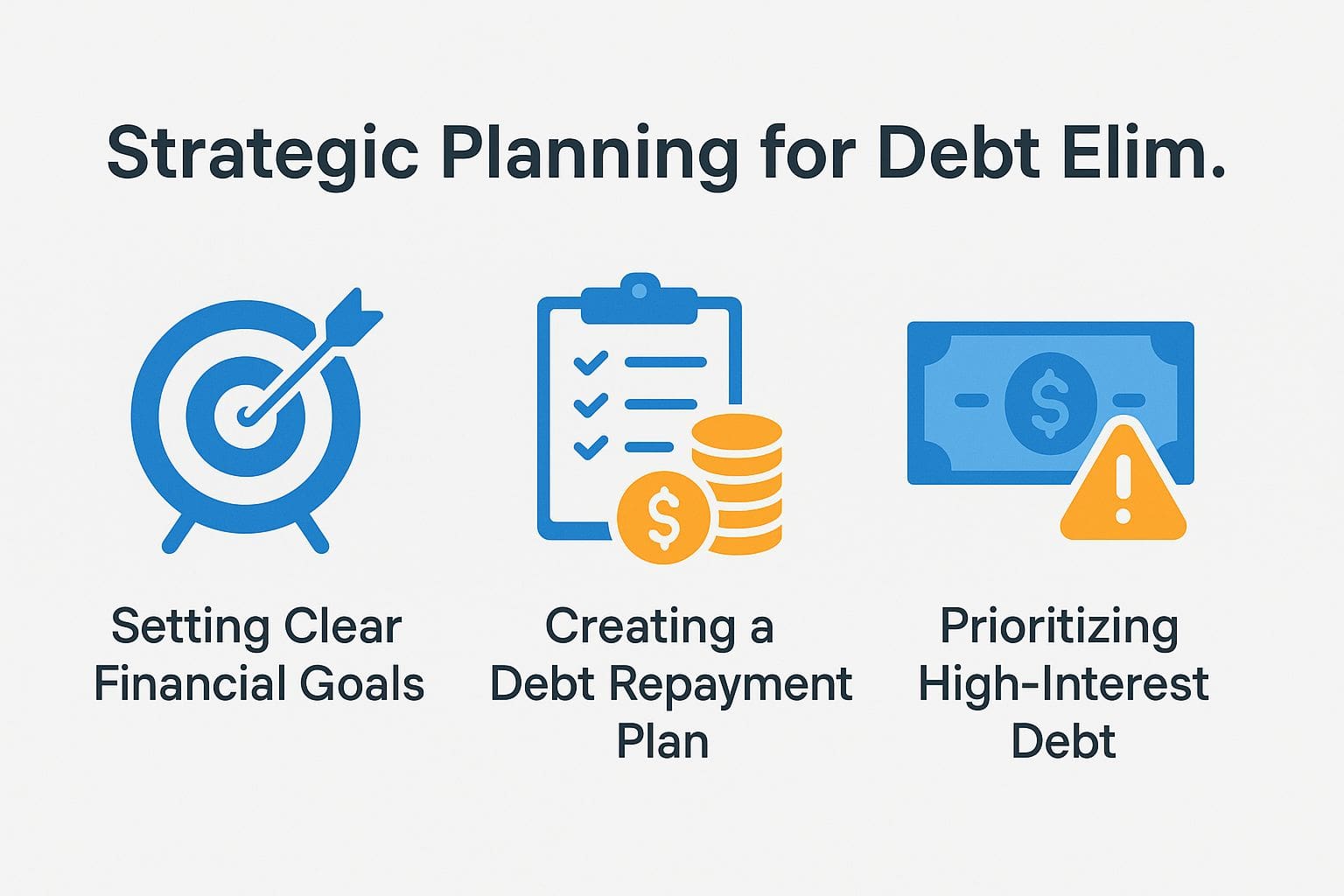
Setting Clear Financial Goals
Establishing clear and measurable financial goals helps prioritize debt repayment and guides your overall debt management strategy.
To create clear goals for paying off debt, start by deciding how much you want to repay. For example, if you’re dealing with a $10,000 credit card debt, plan to lower it by $2,000 over the next year. This translates to approximately $2,000.
Break down your goal into smaller parts and try to pay around $167 every month. Make it relevant by linking it to a larger financial goal, like improving your credit score.
Set a timeline-review your progress quarterly to adjust your investment strategies as needed.
Creating a Debt Repayment Plan
Create a structured debt repayment plan with strategic planning that details how you will tackle your debts over a specified period.
Start by listing all your debts, including the total amount owed, interest rates, and minimum monthly payments.
Then, choose a repayment method, such as the snowball or avalanche technique.
The snowball method focuses on paying off the smallest debts first, generating quick wins, while the avalanche method targets the highest interest debts, saving you more money in the long run.
Tools like EveryDollar allow you to track your spending, display your transactions, and adjust your budget whenever necessary.
Prioritizing High-Interest Debt
Focus on paying off high-interest debts first, as they can significantly hinder your cash flow, profitability analysis, and overall financial health.
Start by identifying debts with the highest interest rates, such as credit cards or personal loans. For example, if you have a $5,000 credit card debt at 20% interest and a $10,000 student loan at 5%, prioritize the credit card.
Consolidation tools like SoFi can help reduce interest rates, while the debt snowball method encourages tackling the smallest debts first for motivation.
By focusing on high-interest debts, you could save hundreds each month, improving your financial health significantly over time.
Utilizing Financial Tools and Resources
Using financial tools and resources can significantly improve how you handle debt servicing and make your financial planning easier. In fact, understanding the top strategies for minimizing unpaid debts can greatly enhance your approach to managing debt.
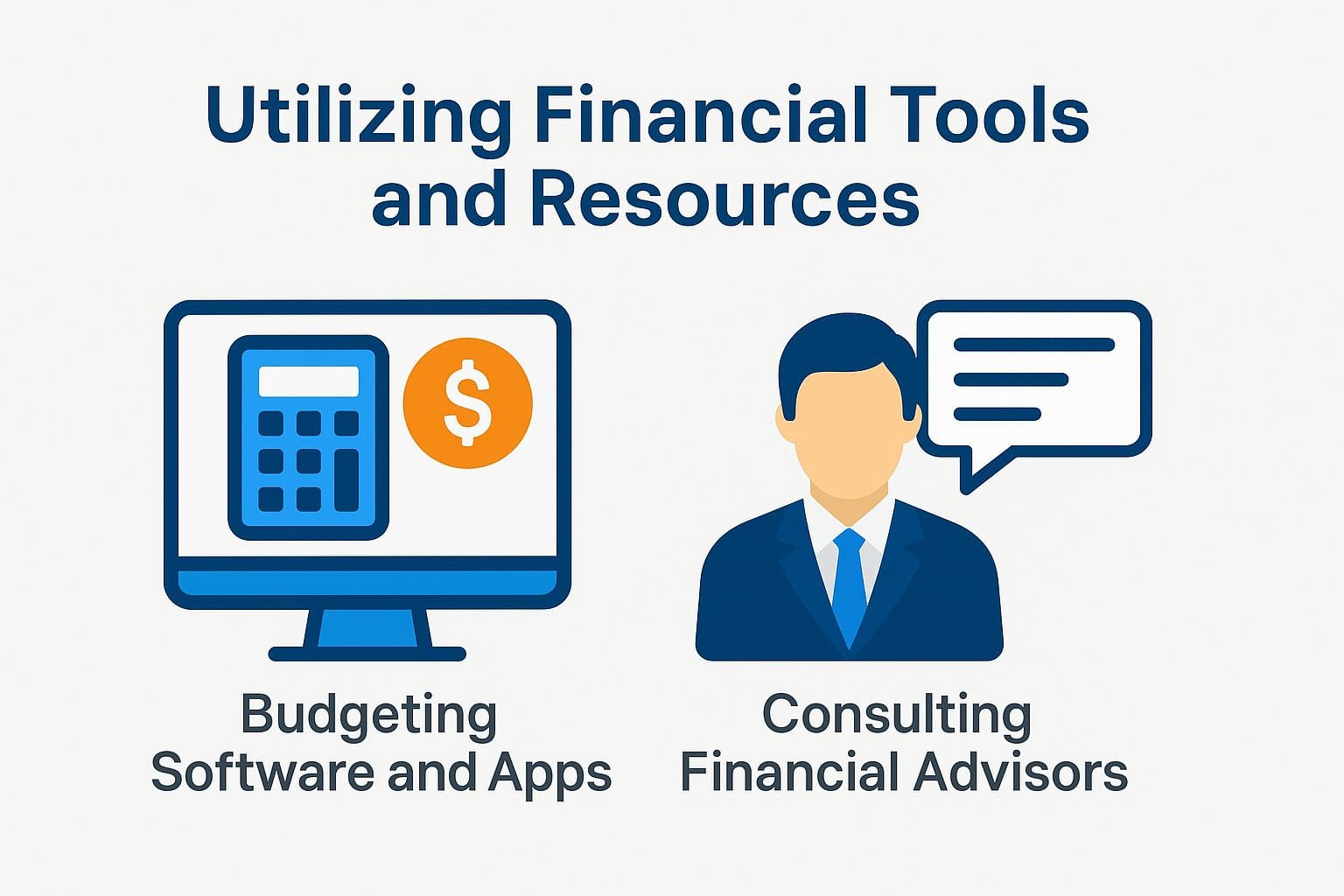
Budgeting Software and Apps
Utilizing budgeting software like Mint or YNAB (You Need a Budget) can help with cost management and manage your debt more effectively.
Both platforms offer unique features that cater to various budgeting styles. Mint, free to use, provides a user-friendly interface, automatically categorizing transactions from linked financial accounts.
YNAB stands out because it encourages people to plan their finances by giving each dollar they earn a specific role, supporting a more organized approach to managing money. YNAB costs $14.99 per month but offers a 34-day free trial.
Consider your needs: if you prefer automation and ease, Mint is ideal; for hands-on management, choose YNAB.
Consulting Financial Advisors
Working with financial advisors can give you customized advice and plans for your specific debt challenges and financial well-being.
On average, financial advisors charge between $100 and $300 per hour. The return on investment can be significant, as their knowledge might help you save thousands by improving your budget and investment plans.
When selecting an advisor, consider asking:
- What are your qualifications?
- How do you charge for services?
- Can you provide client references?
Talk about your specific goals at the beginning to make sure they match the advisor’s skills, which will help you get the most out of working together.
Using Different Sources of Income to Lower Debt
Increasing your income is a strategic way for income diversification to help reduce debt and improve your financial situation.

Increasing Sales and Revenue
Concentrated sales methods can increase income, allowing you to settle debt more quickly.
Think about teaching your sales team how to suggest related products to customers. For example, if a customer is purchasing a camera, suggest a high-quality lens or tripod.
Diversifying your product lines can also attract different customer segments; for instance, if you sell electronics, consider branching into accessories like cases and chargers.
Use email marketing tools like HubSpot or Mailchimp to contact clients with customized promotions, effectively involving them and increasing conversion rates without high costs.
Diversifying Income Sources
Exploring diverse income sources can reduce reliance on a single stream, enhancing financial stability and aiding in debt repayment.
Think about adding freelance work, like writing, graphic design, or consulting, to make use of your current skills. Platforms like Upwork or Fiverr can help you connect with clients.
Work with local businesses to promote each other; this can help you find new customers and grow your contacts.
Establish passive income streams through avenues like affiliate marketing or creating online courses, which are strategic investments. Having multiple sources of income can reduce your risk and potentially increase your earnings. Research shows that people with various ways to earn money make 40% more on average.
Negotiating with Creditors
Effective creditor negotiation can lead to improved loan terms and reduced financial stress.
Talking with creditors can help you reduce interest rates and change repayment terms to suit your financial needs, while considering the tax implications of each decision. Worth exploring: Top 10 Debt Collection Agencies in 2023 for insights into how different agencies handle these negotiations.

Understanding Your Leverage
Understanding your borrowing limit can help you handle several loans and talk to lenders.
Knowing your strengths in negotiations can help you get better loan conditions and lower your total debt, enhancing your credit score improvement.
Begin by checking your payment history. Pay attention to regular, on-time payments, as this can help increase your credit score and help you manage credit effectively.
Next, evaluate your current financial health-consider factors such as income stability and existing debts, while performing a thorough cost-benefit analysis.
When negotiating, present your positive history and request specific terms, like lower interest rates, showcasing your negotiation skills.
Think about getting offers from different lenders; this can lead to competition and improve your situation, lowering the chance of failing to repay.
For example, if a bank offers a 4% interest rate, use that as a benchmark in discussions with others to potentially secure an even better deal through refinancing.
Strategies for Effective Negotiation
Implementing strategies for effective negotiation can aid in stakeholder engagement and debt recovery.
Use good negotiation tactics, like having backup offers and knowing what your creditor wants, to get better results in small business loans and vendor negotiations.
One important approach is to create a negotiation script that lists the main topics you want to discuss, focusing on fiscal responsibility.
For instance, if negotiating payment terms, specify a lump-sum offer that’s 20% lower than the current demand. Researching similar cases also strengthens your position by providing concrete examples of acceptable terms, benefiting from financial literacy.
Good negotiators often focus on listening. Recognizing the issues a creditor faces lets you suggest solutions that help everyone involved, building trust and increasing the chances of success, which improves relationships with creditors.
Implementing Cost-Cutting Measures
Effective expense reduction strategies can lead to significant savings and improved liquidity management.
Saving money by reducing expenses is important because it allows you to use the extra cash to pay off debts, supporting operational efficiency.

Identifying Unnecessary Expenses
Spotting unneeded costs is very important in managing assets and staying financially strong.
- Start by identifying unnecessary expenses through a thorough review of your financial statements and budgeting practices.
- Begin by organizing your expenses into categories such as housing, utilities, transportation, and entertainment.
- Use tools like Mint or You Need a Budget (YNAB) to track spending patterns over the past three months. Identify areas where spending exceeds income or where subscriptions linger unused.
- For instance, if you notice a recurring charge for a gym membership you rarely use, consider canceling it or switching to a pay-per-visit plan. This detailed approach can save hundreds annually while refining your financial health.
Streamlining Operations
Making operations more efficient is important for business processes and improving the management of working capital.
Streamlining operations can significantly reduce overhead costs, allowing more funds to be allocated toward debt repayment and profitability maximization.
To improve how things run, think about using technology to handle repetitive tasks. For example, using tools like Asana to manage project workflows can save time on task allocation, facilitating operational efficiency.
Outsourcing functions such as payroll or IT services to companies like Gusto or Upwork can free up internal resources. Companies like Zappos have successfully implemented such strategies, reducing costs and improving focus on core activities, contributing to business sustainability.
By carefully looking at work inefficiencies and applying these actions, you can greatly reduce costs and allocate more money to important areas like paying off debt, while considering insolvency risk and digital payment solutions.
Monitoring Progress and Adjusting Strategies
Monitoring progress is essential for financial audits and liquidity ratios.
Frequently check how you’re doing and change your plans if needed to keep moving towards your debt management goals, focusing on economic trends and creditor relationships.
Regular Financial Reviews
Regularly checking your finances aids in managing the balance sheet and improving business predictions.
Regularly checking your finances helps you see how well you are doing with paying off your debts and lets you change plans if needed, ensuring economic resilience.
Aim to conduct these reviews quarterly. During each session, focus on metrics such as cash flow, debt-to-income ratio, and any changes in expenses. Tools like Personal Capital can help track these metrics effortlessly, facilitating liquidity management and stakeholder management.
Start by listing your debts, then analyze your monthly income and expenses to identify patterns. You might want to try budgeting tools like YNAB (You Need A Budget) to better understand your spending, supporting payment processing and growth strategies.
This planned approach keeps you attentive, allowing you to make informed decisions about additional payments or adjusting your budget, considering investment risks and bankruptcy alternatives.
About The Author
Jordan Blake is a B2B strategist and contributor at Price It Here, where she shares expert advice on buying decisions and business growth. She holds a Bachelor’s in Business Administration from the University of Michigan and an MBA from Northwestern’s Kellogg School of Management.
With over a decade of experience in procurement and vendor strategy, Jordan helps businesses save money and scale smarter. Her practical insights make her a trusted voice for entrepreneurs seeking cost-effective, results-driven solutions.
