



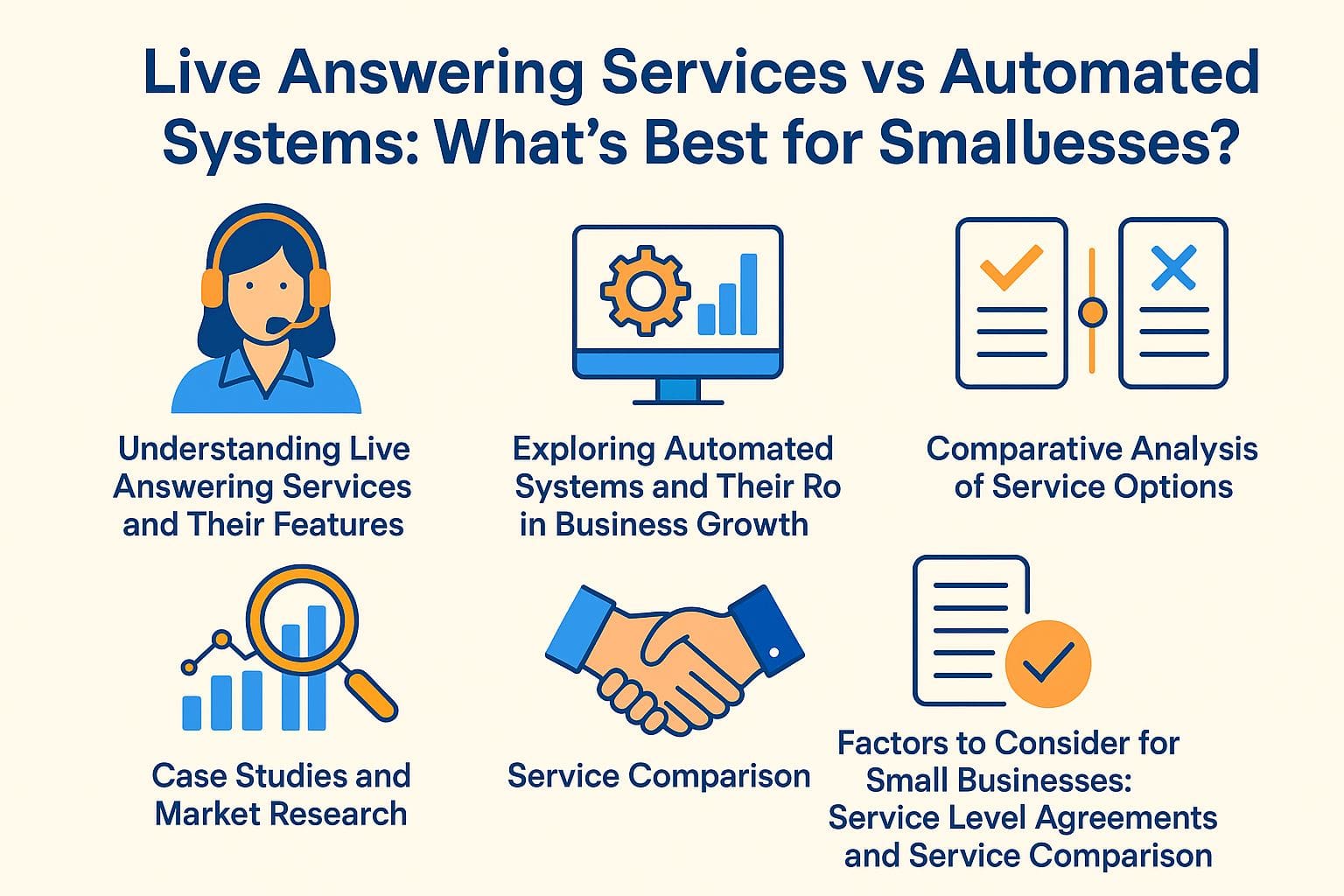
Live Answering Services vs Automated Systems: What’s Best for Small Businesses?
Are you trying to decide between a live answering service and a computerized system for your small business communication needs? The choice can make a big impact on customer satisfaction, business efficiency, and operational efficiency. Knowing the pros and cons of each choice is very important. Learn how live answering services can give a human feel, while automated systems can be more efficient and save money. Which solution aligns best with your goals? Let’s find out.
Context of the Discussion
As technology changes quickly, small businesses need to update how they communicate to satisfy their customers and improve customer service quality.
A significant trend is using both human answering services and automated systems together. Using services like LivePerson or Zendesk improves instant communication and keeps work moving smoothly.
Studies show that customers prioritize quick responses, with 67% expecting a reply within minutes, highlighting the importance of responsiveness in customer service.
Businesses should combine the use of automated replies for simple questions with live agents for complex issues to speed up response times and increase customer satisfaction.
Implementing these strategies can lead to better customer engagement and loyalty, enhancing client relationship management.
Importance for Small Businesses and Business Strategy
For small businesses, using live answering services can improve customer satisfaction by 30%, which helps keep more clients and supports better user experience.
These services solve problems like missed calls and slow replies, ensuring customers get quick help.
For instance, a small retail shop using AnswerConnect experienced a 25% increase in return customers after onboarding the service, which manages calls 24/7.
Companies like Ruby and Smith.ai offer customizable solutions, allowing businesses to prioritize urgent inquiries, demonstrating service scalability and operational flexibility.
By adding a live answering service, small businesses improve their reputation and build a loyal customer base, which increases their profits. Worth exploring: How to Compete with Big Brands (Even on a Small Business Budget)
Compare Quotes
Explaining Live Answering Services and Their Characteristics
Live answering services connect callers to a real person immediately, ensuring customer questions are resolved promptly and professionally. To make an informed decision, it’s crucial to understand all aspects, including costs. Learn more about the costs associated with answering services in 2025.

Definition and Functionality
Live answering services have operators who are trained to take incoming calls, providing round-the-clock availability for your business.
These services operate by routing calls from your business number to a dedicated team of virtual receptionists who answer in your company’s name.
They use advanced call management technology like cloud-based phone systems, enabling seamless communication.Popular providers include:
- Ruby provides a personal service for $299 per month, highlighting its professional reputation and dependable service.
- AnswerConnect offers useful tools for $195 each month, showing its strong advantage and effective use of resources.
Both options offer message recording, transferring calls, and setting up appointments. They adjust to your business needs and greatly improve customer interaction.
Benefits of Live Answering Services
Using live answering services can raise customer satisfaction scores by up to 25% due to the individualized service.
These services improve customer satisfaction by ensuring a real person answers inquiries, reducing frustration and enhancing service accessibility.
For instance, companies that use live answering can handle 50% more calls without sacrificing response quality. When knowledgeable representatives behave professionally and know the topic, the brand’s reputation gets better.
A recent survey reveals that 70% of customers prefer speaking to a real person rather than machines. This choice affects how they view the brand and their loyalty to it.
By using this service, businesses make their operations more efficient and build stronger customer connections.
Challenges and Limitations
Despite their advantages, live answering services face challenges such as high operational costs and potential inconsistency in service quality.
One major challenge is the cost, typically ranging from $195 to $500 monthly. To address this, look at services like Ruby or AnswerConnect, which have packages that fit your business size.
Another issue is differences in how operators perform; using a service with thorough training procedures can help maintain steady service quality and user preferences.
Limited control over customer experiences can be addressed through dedicated account managers who help tailor service to your specific needs, ensuring a smoother interaction for clients.
Looking at Automated Systems and How They Help Businesses Grow
Technology-driven systems simplify customer interactions and lead management, offering reliable service 24/7.
Definition and Functionality
Automated systems use software to manage customer questions through tools like chatbots and IVR systems.
These systems simplify support tasks by managing regular questions, letting human agents deal with more complicated problems.
For example, chatbots can provide instant answers to FAQs, guiding customers through troubleshooting steps. Interactive Voice Response (IVR) systems can guide calls based on what users enter, quickly sending questions to the correct department.
Tools like Zendesk and Freshdesk integrate these technologies, enabling seamless customer interactions. Using these solutions improves response times and makes customers happier by offering quick help and reducing wait times.
Benefits of Automated Systems
Automatic systems can reduce operating expenses by 30%, making them an affordable choice for small businesses.
By using tools like Freshdesk and Zendesk, small businesses can improve their customer support without spending a lot of money, ensuring service alternatives and improving marketing support.
For example, Freshdesk is available for $15 per month and includes strong ticketing systems and automatic responses. Zendesk, priced at $19 per month, offers detailed reporting features and easy connections with other tools.
To get the most out of your investment, create clear processes and set up automatic replies for frequently asked questions, reinforcing service workflows and productivity. Curious about how business phone system costs affect your overall budget? Our guide provides insights into making informed decisions.
This method speeds up the process and ensures customers receive support quickly, increasing their satisfaction and loyalty.
Challenges and Limitations
Automated systems often struggle with difficult questions, which can leave customers feeling annoyed and unhappy, showing the need for better service and decision-making.
For example, if a retail business uses chatbots, customers might ask detailed questions about how products work together and get basic responses, leaving them unhappy.
These systems usually do not have the same knowledge as human agents, which makes it hard to deal with delicate topics such as service problems. Complete reliance on automation can pose risks; should the technology fail, customers may face a lack of support altogether.
Combining automation with human supervision helps address complicated or sensitive matters thoughtfully, leading to better customer satisfaction and support services.
Compare Quotes
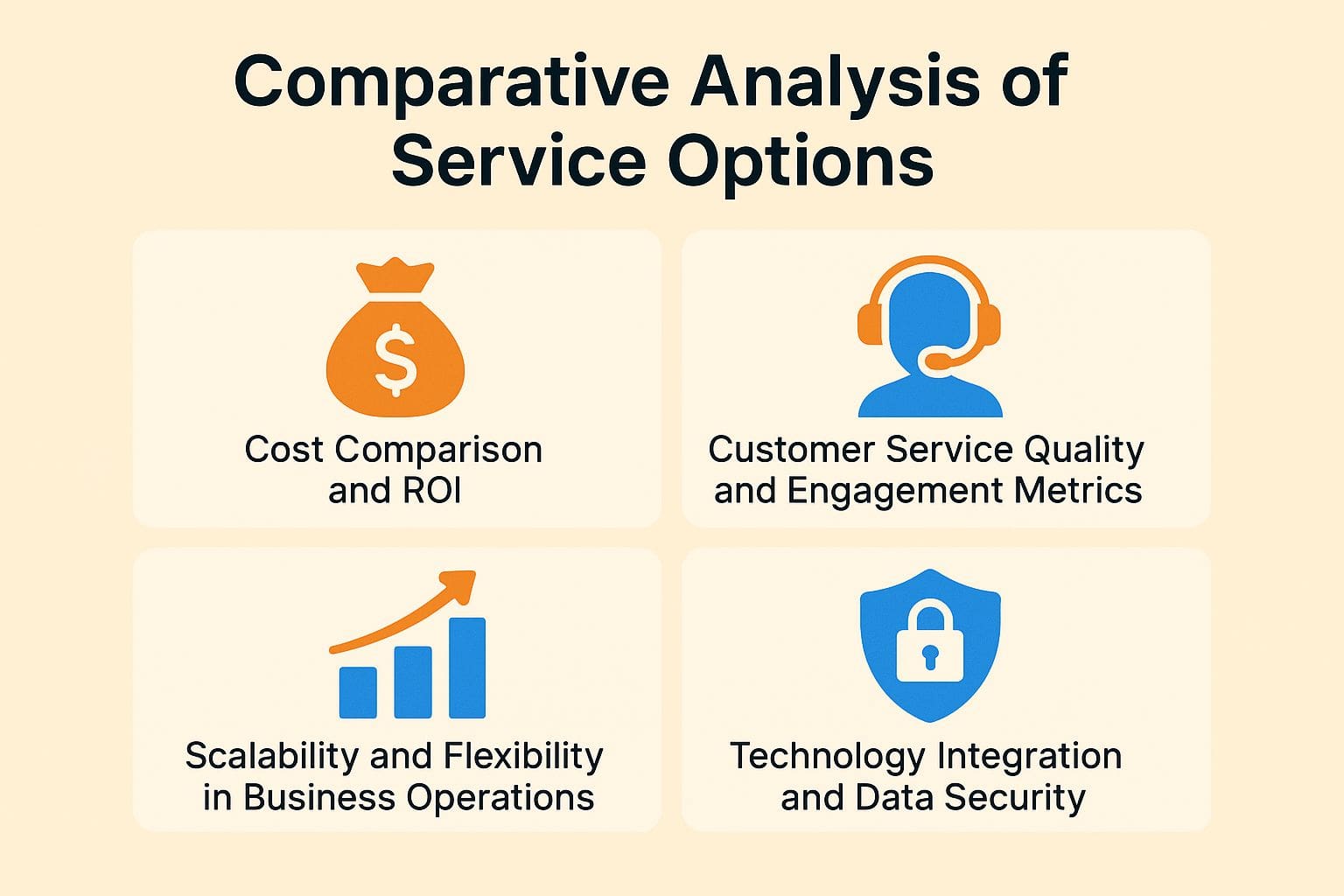
Comparative Analysis of Service Options
Looking at live answering services and automated systems, we find key differences in price, quality of service, how happy customers are, and service standards.
Cost Comparison and ROI
Live answering services typically range from $195 to $500 monthly, while automated systems start at $15 per month, providing different levels of reliability and competitive benefits.
Consider your business needs when choosing between live and pre-recorded answering services. For handling many customer interactions, a service like Ruby ($295/month) might be a good choice because it offers personal customer support.
On the other hand, for startups, Grasshopper (starting at $29/month) can handle calls and messages automatically.
Budgeting should include reviewing your expected number of calls; for instance, if you expect 100 calls each month, consider possible extra charges with auto plans. This plan will help you stay protected while keeping costs low.
Customer Service Quality and Engagement Metrics
The quality of customer service can vary significantly between live operators and automated systems, influencing customer satisfaction.
To evaluate these services, consider three key metrics.
Start by looking at customer satisfaction ratings. These scores are usually better for live services because of the direct, one-on-one interaction.
Next, check how quickly systems respond: automated systems often reply faster, making processes more efficient, but they might overlook small details.
See how different approaches handle complex questions: people are excellent at offering customized assistance, while machines often struggle with detailed inquiries.
Tools like Zendesk can help track and compare these metrics effectively.
Scalability and Flexibility in Business Operations
Automated systems are excellent at expanding, enabling businesses to handle more questions without significantly increasing expenses.
For example, AirAsia started using chatbots for customer service, which helped them quickly process thousands of questions at the same time, especially during busy travel periods.
This automation lowered operational costs and greatly improved response times.
Tools like Zendesk or Intercom can make this process better by automatically organizing and sorting support tickets, ensuring effective call metrics and operational flexibility.
Integrating these systems with AI can provide instant responses to common queries, freeing up human agents for more complex issues.
Using machines for tasks and effective routing makes operations better and keeps customers happy.
Technology Integration and Data Security
Using technology in customer support services can improve how operations run and make communication smoother, enhancing service reliability and quality assurance.
One effective approach is connecting live answering services, such as Ruby or AnswerConnect, with CRM systems like Salesforce. This integration allows for real-time data sharing, ensuring customer interactions are logged instantly.
For instance, when a customer calls, the representative has immediate access to relevant details through call handling, enhancing response quality and facilitating client interaction. Automated systems can use APIs to send and receive data, making it easier to track communication and follow-ups with workflow automation and performance analytics.
Using tools like Zapier can help make these tasks automatic, enhancing time management, saving time and cutting down on mistakes made by hand through technology adoption.
Case Studies and Market Research
Examining real-life cases reveals how companies successfully used live answering services and automated systems to increase customer satisfaction.
Success Stories with Live Answering
A local plumbing company saw a 40% increase in bookings after implementing live answering services, addressing missed calls effectively.
Similarly, a small flower shop saw a 30% increase in customer retention after using the Ruby answering service. By answering all customer questions quickly, they improved customer loyalty and happiness.
A property management company saw a 25% increase in tenant questions answered with its around-the-clock live answering service, using CallRail to measure results.
These businesses used tools like Ruby and CallRail to make communication better and take advantage of every opportunity, which improved lead generation and customer segmentation, helping to increase their profits.
Success Stories with Automated Systems
An online store cut waiting times by half after setting up a chatbot, which answers typical questions immediately.
A retail company used Zendesk Chat to handle customer support automatically. They integrated it with their inventory system, allowing the bot to provide real-time product availability information.
Likewise, a fashion brand adopted Drift, resulting in a 30% increase in sales from queries answered immediately. An electronics store used Tidio to help with solving problems, resulting in a 20% drop in return rates.
These businesses show how using chatbots makes customer questions clearer, which improves customer satisfaction, customer feedback, and reduces costs through cost-effectiveness.
Compare Quotes
Factors to Consider for Small Businesses: Service Level Agreements and Service Comparison
Small businesses should consider various factors when choosing between live answering services and automated systems to best fit their needs.

Business Type and Industry
Different industries need customized customer support methods to align services with the type of business.
For example, B2B companies often need customized help because their products are complicated and the sales process takes longer. Having a specific account manager can improve connections and meet the specific needs of clients.
On the other hand, retail businesses may focus on faster replies by using chatbots to quickly answer frequent questions.
Companies like Zendesk offer custom options that meet both needs, allowing businesses to expand their support as they grow.
Knowing these differences can greatly improve customer satisfaction, adherence to industry standards, and build customer loyalty
Customer Expectations
Knowing what customers want is important; 85% of people want quick replies to their questions, showing the need for fast systems.
Businesses can meet these expectations by using live answering services or automated chatbots. Live answering puts customers in touch with a real person, improving human interaction, increasing trust, and satisfaction through targeted marketing.
Companies like Ruby or AnswerConnect provide customized plans based on how many calls you get and what features you want, focusing on customization and service features. Alternatively, automation tools such as Intercom or Drift can provide instant responses, utilizing AI to resolve common questions.
For many businesses, having live agents tackle difficult questions during busy periods, while using automated replies for easy questions, creates an effective customer service strategy.
Budget Constraints
Small budgets often make it hard to choose between live answering services and automated systems, which can lower the quality of service.
For small businesses, live answering services typically range from $50 to $500 per month, depending on call volume and additional features like appointment scheduling.
However, systems that run automatically can cost between $15 and $120 per month, but they might lack the personal interaction customers desire.
For example, companies that invest in live answering often see a 30% increase in customer satisfaction, resulting in better retention rates and improved ROI over time.
Checking your call volume, call routing, and what customers want helps in choosing the most affordable option.
Final Recommendations
For small businesses, combining live answering and automated systems can provide excellent customer support, improving outsourcing and remote work plans.
To implement this, start by integrating a chatbot on your website to handle common inquiries, freeing up your staff for more complex issues. Tools like Zendesk Chat can help with this process.
Next, make sure you have a live answering service, like Grasshopper or RingCentral, to handle urgent calls after regular business hours, ensuring 24/7 availability and effective voicemail management. This provides ongoing help 24/7, addressing customer needs and using your resources effectively.
Assess your industry demands to tailor the balance of automation and live service effectively, incorporating service trends and service evaluations.
About The Author
Jordan Blake is a B2B strategist and contributor at Price It Here, where she shares expert advice on buying decisions and business growth. She holds a Bachelor’s in Business Administration from the University of Michigan and an MBA from Northwestern’s Kellogg School of Management.
With over a decade of experience in procurement and vendor strategy, Jordan helps businesses save money and scale smarter. Her practical insights make her a trusted voice for entrepreneurs seeking cost-effective, results-driven solutions.
