



Collection Attorney or Agency? How to Choose the Right Debt Recovery Option
Trying to get back money owed can be confusing and difficult. Choosing between a collection attorney and a debt collection agency can significantly impact your success. Each option has its own pros and cons, making the choice important. In this guide, you’ll learn what sets each option apart, the elements that affect your decision, and how to compare costs and success rates. Find the quickest way to get the money you’re owed.
Understanding Debt Recovery
Debt recovery encompasses various strategies and methods employed by creditors to reclaim unpaid debts, including negotiation tactics and legal actions.
The recovery process usually starts with creditors contacting debtors to send notices or discuss payment arrangements.
Tools like debt recovery software, such as Collect! or Capterra, simplify the process of tracking and managing.
If negotiation fails, creditors may escalate to legal actions, which can involve hiring attorneys experienced in debt collection laws.
Knowing consumer rights is important because the Fair Debt Collection Practices Act guards against harassment, ensuring compliance with consumer protection laws.
Engaging professional services can increase the chances of successful recovery while ensuring compliance with legal standards. For more effective strategies, consider exploring our best practices for effective debt collection.
The Importance of Choosing the Right Option
Selecting the appropriate debt recovery method can significantly impact the recovery rate, legal compliance, and overall relationship with debtors.
The choice between in-house collection, third-party agencies, or legal action should consider factors such as recovery rates and the potential effect on customer relationships.
For instance, in-house collections might yield better results when dealing with long-term clients, preserving goodwill. If debts are significantly overdue, hiring a third-party agency can improve efficiency, often recovering debts at a higher rate due to their specialized skills.
Legal action might be necessary for large sums, but it can harm relationships. It’s important to consider the possible expenses compared to the advantages you expect.
Compare Agency Quotes
Collection Attorneys
A collection attorney focuses on legal cases about recovering debts. They help creditors know the relevant laws and rules. For those interested in the larger landscape, our list of the Top 10 Debt Collection Agencies in 2023 provides valuable insights into prominent players in the industry.
What is a Collection Attorney?
Collection attorneys are legal professionals who represent creditors in the recovery of outstanding debts through litigation and negotiation.
They play a critical role in court, presenting evidence and legal arguments to support claims against debtors. Collection attorneys often engage directly with debtors to negotiate payment plans or settlements, employing strategies to improve recovery rates without resorting to immediate litigation.
For instance, they might recommend restructuring the debt or offering a discount for immediate payment. Programs like case management software allow them to monitor accounts effectively, while legal research databases keep them informed about important laws and past rulings.
Their main goal is to collect debts while keeping good professional connections.
Advantages of Hiring a Collection Attorney
Hiring a collection attorney can help recover more money, as they have the legal knowledge and negotiation skills needed for collecting debts.
A collection attorney can improve your chances of recovering debts significantly, often achieving recovery rates of 40% compared to only 20% when using collection agencies.
They work through complicated debt recovery laws, following rules and looking out for your needs. They can provide customized plans based on the debtor’s financial situation.
For example, by pursuing legal action for larger debts, such as enforcing judgments and going to court, they create pressure that often results in fast payments. Hiring a lawyer increases your chances of getting better compensation and reduces your legal risks.
Disadvantages of Hiring a Collection Attorney
While collection attorneys provide legal benefits, their services often come with higher costs and may result in prolonged recovery timelines.
Typically, fees for collection attorneys range from $200 to $500 per hour, which can accumulate quickly, especially for small businesses.
They might need a few weeks or months to start healing, depending on how complicated the situation is. Businesses might consider alternatives like third-party collection agencies, which often charge a contingency fee of 20-30% of recovered debt, or implementing credit management tools for proactive measures.
This plan can cut expenses and speed up recovery, making efficient use of money.
When to Consider a Collection Attorney
Consider hiring a collection attorney when debts exceed $10,000 or when prior recovery attempts have failed, indicating a need for legal action.
If you are handling large debts like business accounts or contracts, it is important to have a collection attorney’s knowledge and skills.
Handling cases with liens or bankruptcies often needs experienced legal knowledge to manage properly. Repeated failures in negotiations with debtors suggest a pattern of evasiveness, which may necessitate formal legal proceedings to enforce judgment.
Hiring a collection attorney can help protect your interests and increase the chances of getting back money you are owed.
Compare Agency Quotes
Collection Agencies
Collection agencies are companies that focus on collecting debts, providing an alternative to hiring a lawyer. Utilizing such agencies can offer numerous advantages, especially in ensuring faster payments, which is crucial for small businesses. For more insights into how they achieve this, see our detailed analysis on How Collection Agencies Ensure Faster Payments for Small Businesses.
What is a Collection Agency?
A collection agency acts on behalf of creditors to recover outstanding debts, typically for a fee, service fees, or a percentage of the recovered amount.
These agencies generally operate through a series of structured steps.
- Initially, they assess the overdue accounts, determining which debts are viable for collection.
- Then, they begin contacting debtors via phone, email, or letters.
The fees can vary: many agencies charge around 20-50% of the total debt collected, depending on the age of the debt and the difficulty of collection. For instance, older debts may incur higher fees if they require extensive effort, such as skip tracing, to resolve. Grasping these elements can aid companies in selecting the appropriate agency.
Advantages of Using a Collection Agency
Collection agencies can often collect debts effectively, letting creditors concentrate on their main business tasks while increasing the amount of money recovered.
By using specific tools and methods, including collection tactics and strategic partnerships, creditors can achieve better results in collecting debts. For example, agencies like Dun & Bradstreet offer credit reporting services that help identify high-risk accounts.
Apps such as DebtorDEX send payment alerts and keep track of them, which can improve debt collection. Having set schedules for collections, like monthly evaluations, helps in dealing with accounts quickly.
Building clear communication with agencies encourages openness and can improve recovery results.
Disadvantages of Using a Collection Agency
Working with collection agencies can lead to generic service and might harm the relationship between creditors and debtors.
To mitigate these risks, consider negotiating terms directly with your creditors before involving agencies. Establish clear payment plans and communicate your situation openly, employing effective communication strategies, which could lead to more favorable arrangements.
Tools like Debtsimple can help you manage your debt more transparently, allowing you to visualize your payment strategy. Learning about your legal rights can give you confidence when dealing with creditors, helping you keep good relationships while handling unpaid debts.
When to Consider a Collection Agency
Consider utilizing a collection agency when debts are smaller (under $10,000) or when you need a quick resolution without legal intervention.
Using a collection agency works well in many situations.
For small debts, these agencies often work on a contingency fee basis, meaning they only get paid when they collect. This can save you costs upfront.
If you have a lot of overdue accounts, a company can handle them well, increasing the chance of getting your money back.
When time is of the essence, collection agencies typically employ established strategies, which can lead to faster resolutions than individual follow-ups.
Compare Agency Quotes
Comparing Collection Attorneys and Agencies
Looking at the differences between collection lawyers and agencies can help lenders choose wisely based on expenses, effectiveness, and legal safeguards.
Cost Considerations
Collection attorneys typically charge hourly rates or a flat fee, legal fees, while collection agencies often work on a commission basis, affecting overall costs.
Typically, attorneys charge between $200 and $500 per hour, depending on their experience and case complexity.
In contrast, collection agencies usually take 20% to 50% of the recovered amount. For a debt of $10,000, hiring an attorney may cost you $1,000 to $2,500 upfront, while an agency might earn $2,000 to $5,000 only if they successfully recover the debt.
If you’re dealing with smaller amounts or prefer to manage the collection process without a hefty upfront fee, an agency can often be more cost-effective. For complicated situations, a lawyer could gather payments more quickly.
Success Rates
Success rates can vary significantly, with collection agencies often achieving up to 30% recovery rates compared to collection attorneys’ 60% for litigated debts.
Various elements affect these recovery rates, such as the kind of debt and the method used.
For example, collection attorneys may engage in litigation, thus increasing their recovery potential on larger, disputed accounts. In contrast, choosing a collection agency typically involves negotiation tactics for smaller, non-disputed debts.
A case study revealed that a collection attorney, a form of legal representation, secured a 75% recovery on a $5,000 debt through court proceedings, while an agency achieved just a 20% recovery on similar amounts without litigation.
Employing a blend of both methods often yields better overall collection outcomes.
Legal Protections and Compliance in Debt Collection
Know the legal protections for each choice, especially concerning the Fair Debt Collection Practices Act (FDCPA) and the rights of people who owe money.
To comply with the FDCPA and uphold ethical standards, it is important to provide detailed training programs for all employees who work with debt collection. This includes educating them about prohibited practices, such as calling debtors outside of reasonable hours and using deceptive language.
Consider utilizing compliance tracking software, like ComplianceBridge or DebtorTrace, which can help monitor debtor communications and flag potential violations. Regular reviews and adjustments to your processes as laws change can greatly lower risks and improve how your organization follows regulations.
Compare Agency Quotes
Factors to Consider in Your Debt Recovery Options Decision
Different factors influence the decision to hire a collection lawyer or agency. These include the kind and size of the debt, how quickly you need the money back, and any current business connections you might have related to financial recovery.
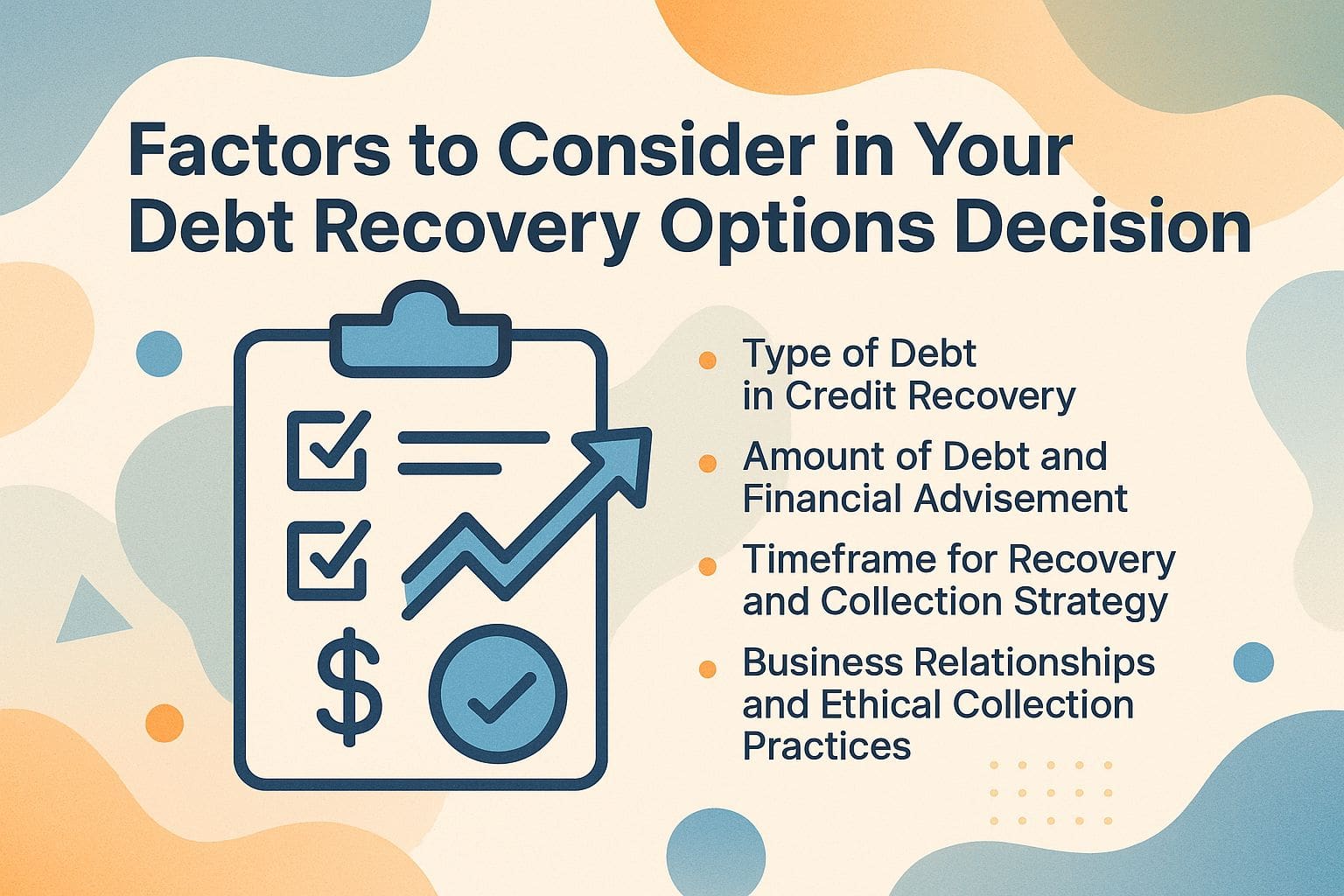
Type of Debt in Credit Recovery
Different types of debt, such as consumer versus commercial debts, may require distinct recovery strategies and approaches, including effective collection strategies.
Consumer debts, such as credit card balances or personal loans, often involve high interest rates and could benefit from negotiated settlements with creditors, focusing on debt settlement. For example, using services like Debt.org can help with negotiating, which might lower the overall debt.
Conversely, commercial debts, like unpaid invoices from clients, typically require legal action or arbitration, utilizing platforms like QuickBooks for tracking and auditing accounts receivable.
Knowing the details of each debt type helps choose the best recovery method for the situation.
Amount of Debt and Financial Advisement
The amount of debt is a critical factor; smaller debts may be more suited for collection agencies, while larger debts may warrant legal representation and a licensed attorney.
For debts under $5,000, collection agencies can be effective, as they often charge lower agency fees, typically around 25-35% of the collected amount.
For debts exceeding $5,000, hiring an attorney may be more prudent, particularly if the debtor’s ability to pay is in question or if additional legal action is necessary.
In these situations, a lawyer can offer specific approaches, such as legal action or collection agreements, to get back money. Assessing the size and nature of your debt can guide your choice between agency support and legal intervention.
Timeframe for Recovery and Collection Strategy
The urgency of recovery can determine your choice; collection agencies often offer quicker resolutions than attorneys, who may pursue litigation or collection lawsuits.
Collection agencies usually settle debts in a short time, which is useful for emergencies. They might charge around 20-50% of the recovered amount as their fee.
In contrast, attorneys can take months, and their fees, which might include retainer and hourly rates, can escalate quickly. If speed and efficiency are paramount, consider utilizing an agency.
For more complex cases that require legal recourse, hiring an attorney may yield a better long-term result, despite the delayed timeline. Carefully assess your situation for optimal debt recovery options to choose the best path.
Business Relationships and Ethical Collection Practices
Keeping good business relationships with those who owe money is important; collection agencies often use gentler methods than lawyers, promoting ethical collection practices.
Utilizing collection agencies can help balance professionalism and recovery efforts. Agencies with experience in your industry usually know the market well and can recommend effective collection strategies.
On the other hand, legal firms might take a firmer stance, which can strain client relationships. Therefore, assess your prior interactions and choose an approach that aligns with your brand values.
Think about discussing payment plans that encourage debtors to resume regular business dealings, promoting a feeling of working together instead of opposition.
Final Thoughts on Choosing the Right Debt Recovery Option
Comparing the benefits and drawbacks of collection attorneys and agencies helps you choose the best option for recovering debt.
Collection attorneys typically charge a percentage of the amount recovered, often ranging from 25% to 50%. They might go to court if needed, which can improve efforts to get back what is owed.
Conversely, collection agencies usually operate on a commission basis, often between 10% and 30%, and may not pursue legal remedies. When choosing between them, consider agency performance, how much you expect to recover, and whether legal action is likely needed.
Reflect on these factors to make an informed choice suited to your specific situations and priorities.
Next Steps for Debt Recovery and Financial Stability
After assessing your recovery options, consider creating a structured action plan that outlines your next steps towards debt recovery.
Begin by evaluating your total debt and prioritizing it based on interest rates and urgency, utilizing finance management strategies. Use a spreadsheet to track each debt’s specifics, including amounts, interest rates, and due dates.
Next, choose a recovery method like the snowball or avalanche approach. The snowball method involves paying off the smallest debts first, giving a mental lift, while the avalanche method saves money on interest by prioritizing debts with the highest rates first.
Set realistic timelines for each payment step to help you stay motivated as you work toward financial stability and improved financial health.
About The Author
Jordan Blake is a B2B strategist and contributor at Price It Here, where she shares expert advice on buying decisions and business growth. She holds a Bachelor’s in Business Administration from the University of Michigan and an MBA from Northwestern’s Kellogg School of Management.
With over a decade of experience in procurement and vendor strategy, Jordan helps businesses save money and scale smarter. Her practical insights make her a trusted voice for entrepreneurs seeking cost-effective, results-driven solutions.
